A wash is any passage of watercolor laid down as a continuous area of color rather than as separate strokes. It is the basic building block of the medium, and it is…
S SolvaHub Studio EditorsPublished October 23, 20256 min read1,357 words
Keeping Watercolor Washes From Running Together — the idea behind the technique, and where beginners usually go wrong.
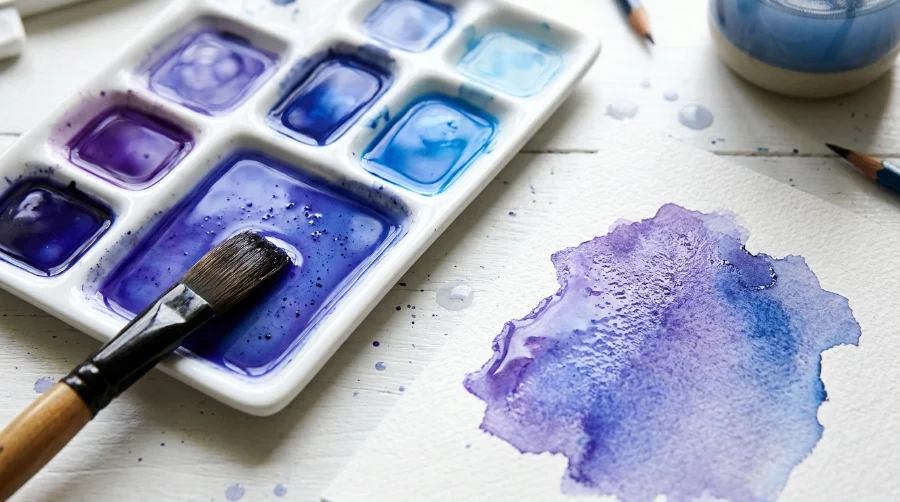
A wash is any passage of watercolor laid down as a continuous area of color rather than as separate strokes. It is the basic building block of the medium, and it is also where most beginners lose control of a painting. A wash that behaves for the first few seconds can suddenly bloom, cauliflower, or dry into a hard, lumpy edge that no amount of careful painting will hide.
None of that is the paint misbehaving. A wash is a moving system of water and pigment, and it goes where the water goes. Once you can predict its movement, the medium stops being unpredictable.
Three variables decide everything
Every wash is the result of three things: how much water, how wet the paper is, and how long you leave it alone.
Water in the brush determines how much pigment is carried and how fluid the wash is.
Water in the paper determines how far the wash can travel and whether edges will be soft.
Time determines whether the wash has time to travel at all.
If you can name which of the three is causing a problem, you can fix it. Most wash disasters come from adding water to the paper while the wash is still moving, which is the one variable that cannot be corrected once it happens.
Wet-on-dry for a hard edge
For a wash with a crisp boundary, the paper must be completely dry before you paint.
Start with a dry sheet and a clean, dry brush.
Load a controlled amount of color. Too much water means a long, uncontrolled journey across the paper.
Paint from the top of the shape downward, letting gravity carry the wash to the edge of the area.
Keep the brush wet as you work. The first stroke starts the wash and every following stroke feeds into it. Lifting the brush to re-load mid-wash creates a drying line.
Stop cleanly. Do not return to a shape you have finished. Coming back to a partially dry edge is what produces cauliflower.
The result is a flat area of even color with a defined boundary, which is the right choice for a background, a shadow shape, or the shadow side of a form.
Wet-on-wet for a soft edge
For a soft, blended boundary, wet the paper first.
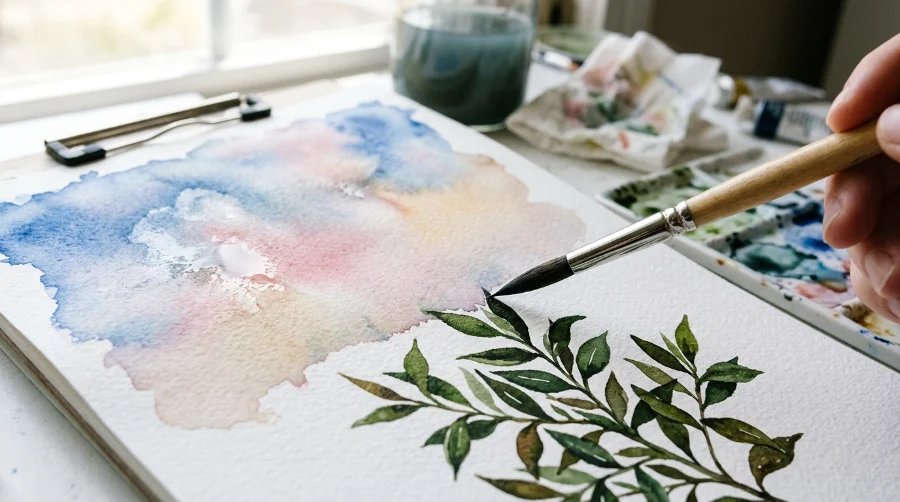
Brush clean water over the area you want to paint and let it soak in until the paper looks evenly damp rather than shiny. Then drop color into the damp area and let it spread. The pigment will travel into the water and stop at the edge of the wet region, which creates a soft, feathered boundary.
The main risk is over-wetting. If the paper is too wet, the pigment pools and drifts and the wash spreads farther than the shape you intended. A good test is to wait a moment after wetting: the paper should feel damp, not cool and slippery.
The critical drying window
This is the single most useful thing to know about washes. A wash that is nearly dry will not accept new pigment smoothly. It will push the new color back, creating a hard cauliflower rim exactly along the boundary where the old wash met the dry paper.
The window in which a wash can still be adjusted is between wet and dry, and it is fairly short. Test it by touching the edge of the wash lightly with a clean finger. If the surface feels cool and damp, it is still workable. If it feels tacky or shows any slight drag, it has gone too far.
If you miss the window, the fixes are still available. You can rewet the area and soften the edge, or you can scrub the rim with a damp brush to lift the concentrated pigment. But both are corrections, and preventing the problem is easier than repairing it.
Painting a graded wash
A graded wash, where the color fades from one edge to another, is the most demanding basic wash, and it is worth learning because it teaches you to control water precisely.
Paint the top edge first with the full-strength mixture, keeping the brush moving horizontally.
Add water to the remaining mixture on the palette so the next stroke is slightly weaker.
Continue downward, slightly overlapping the previous stroke while it is still damp. The overlap creates a soft transition instead of a line.
Keep adding water as you go, so the wash fades gradually rather than in visible steps.
Do not return to the top. By the time you reach the bottom, the top has set, and touching it creates a hard edge.
The mistakes that spoil this are all about water. Reloading the brush with the mixture instead of adding water produces a series of bands. Leaving too much water on the brush at the start causes the first stroke to bloom. And starting from the bottom instead of the top is the most common error, because the wash then runs into an area that is already drying.
Backruns and cauliflower edges
A backrun happens when clean water is dropped into a wash that is beginning to dry. The water pushes pigment outward, and it collects at the boundary as a dark line. It looks like a hard edge with a stain, and it is one of the most common problems in watercolor.
The fix, if you catch it in time, is to add more clean water to the center of the run rather than to the edges. The pigment flows away from the center toward the middle of the shape and the rim evens out.
Once it has dried, you can lift the rim with a damp brush, or rewet the whole area and let it level out. Prevention is simple: never introduce clean water into a drying wash, and never leave a wash unattended while it sets.
Even washes and backruns from the brush
A flat wash should be even, but washes often show streaks where the paper has strong texture. The streaks come from the wash setting faster in the valleys of the tooth than on the peaks.
Two habits help. First, tilt the paper very slightly toward you as you work so the wash pulls itself downward evenly. Second, keep the wash moving: a static brush sitting in one place drops more pigment and creates a blotch. For large flat areas, a broad mop or a large flat brush loaded well is more reliable than a small round brush.
Common problems and their causes
Hard, lumpy edges. The wash dried at the boundary while pigment concentrated there. Use less water, work on drier paper, and stop returning to a shape.
Dark rims. A backrun, caused by clean water meeting a drying wash. Keep adding water to the center of a run rather than the edge.
Blotchy flat areas. Too much pigment, too little water, or a brush that sat still. Use a broader brush and keep it moving.
The wash runs where you did not want it. The paper was wetter than you thought. Wait for the sheen to disappear before painting.
Visible bands in a gradient. The mixture was reloaded rather than diluted, or the strokes did not overlap while damp.
The wash dried too fast to adjust. You waited too long. Work in smaller areas, or humidify the room slightly if you are painting large passages.
Short exercises
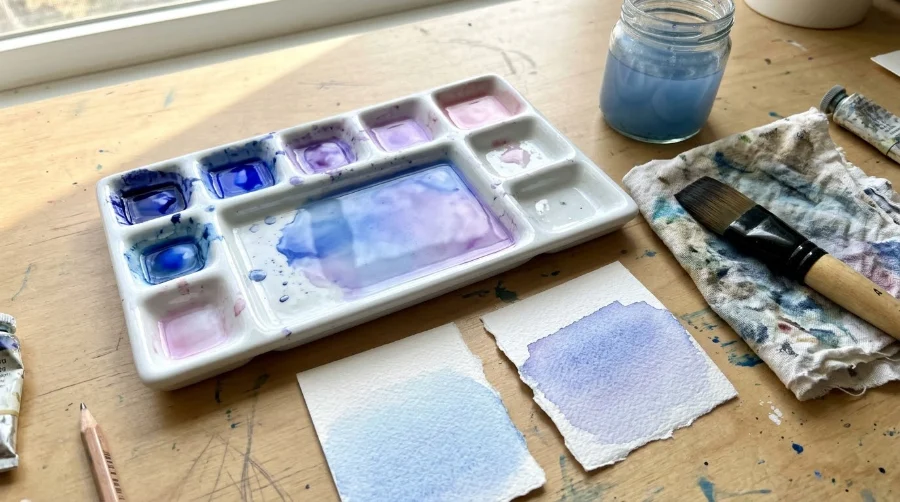
Hard and soft. Paint the same shape twice, once on dry paper and once on damp paper, and compare the edges directly.
Three grades. Paint a rectangle in three horizontal bands, each a different dilution, and check that the transitions are soft.
A full gradient. Paint one graded wash from top to bottom without reloading the brush, and learn to dilute rather than to reload.
Backrun practice. Deliberately drop clean water into a drying wash and repair it. Making the mistake on purpose teaches the window better than reading about it.
Once washes stop being the thing you are afraid of, everything else in watercolor gets easier, because almost every other technique is built on laying down an area of color and controlling where it ends.
S
SolvaHub Studio Editors
We teach drawing and painting from the ground up — line and shape, perspective and value, color and pigment, and the practice that turns all of it into skill. Every lesson is written around a real difficulty, tested on real materials, and edited for clarity before it goes live. If something here helps, the contact page is the fastest way to tell us.
A painted sky is mostly gradient. The whole upper half of a landscape painting is a transition from one color to another, and the transition has to be seamless or…
Almost every choice you make in watercolor comes down to one question: is the surface you are painting onto wet or dry? The two answers produce completely different…
Water is the easiest subject to paint badly and one of the hardest to paint well. The reason is that we expect water to be a color, and it is not. A wave is a shape…