Simplifying Distance and Stacking Planes in Landscape Sketches
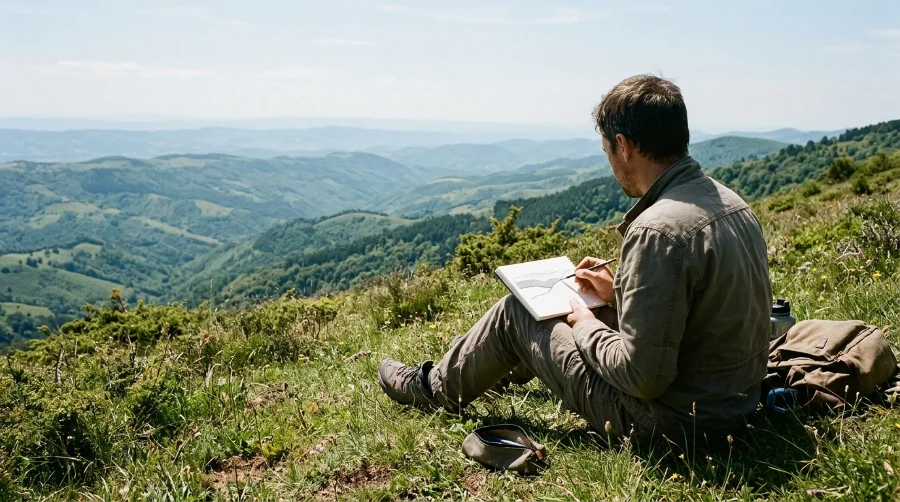
A landscape is the hardest subject to draw from life and the easiest to draw badly. The reason is that a real landscape contains an enormous amount of information…
Gesture, contour, urban sketching, animals and drapery — capturing what you see while it is still moving.
A landscape is the hardest subject to draw from life and the easiest to draw badly. The reason is that a real landscape contains an enormous amount of information…
Interior sketching has a reputation for being difficult because rooms have a lot of straight lines that all need to meet properly. That is true, and the difficulty…
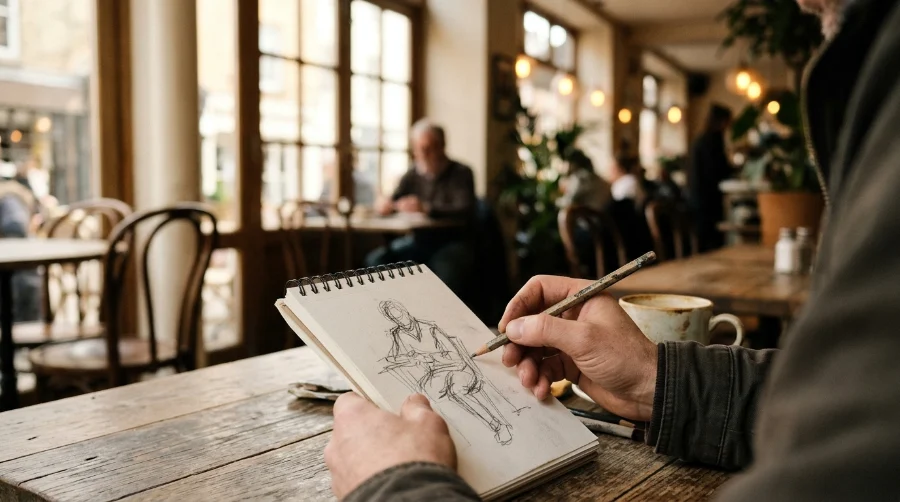
Drawing strangers is the part of figure drawing that beginners put off longest, usually because they imagine the people they draw will notice, react, or mind. In…
Cloth is the classic beginner trap. It has no bones, no fixed shape, and no consistent structure, so students assume it can only be drawn by copying whatever curves…
Birds are the classic subject for quick sketching, and the reason is that they never hold still. The frustration that beginners feel is usually not about drawing…
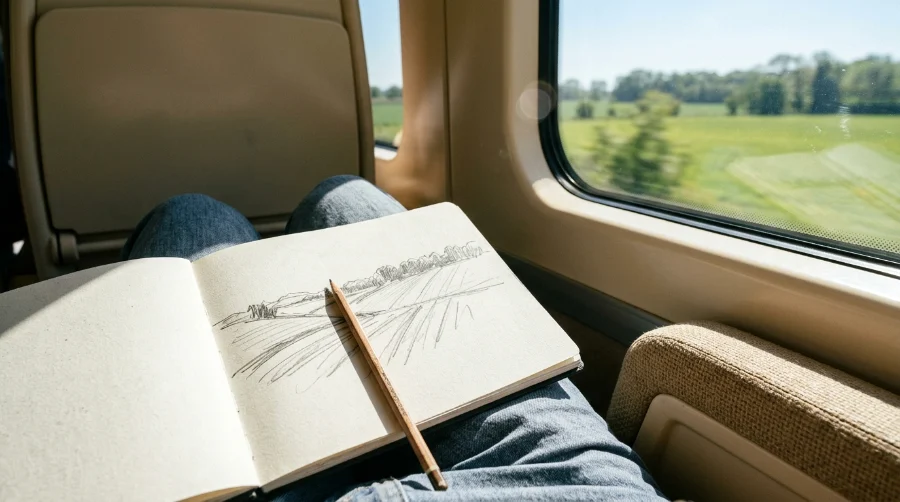
Drawing from a train, a bus, or a car is a specific kind of challenge, and the difficulty is almost never artistic. It is physical. The paper shakes, the subject…
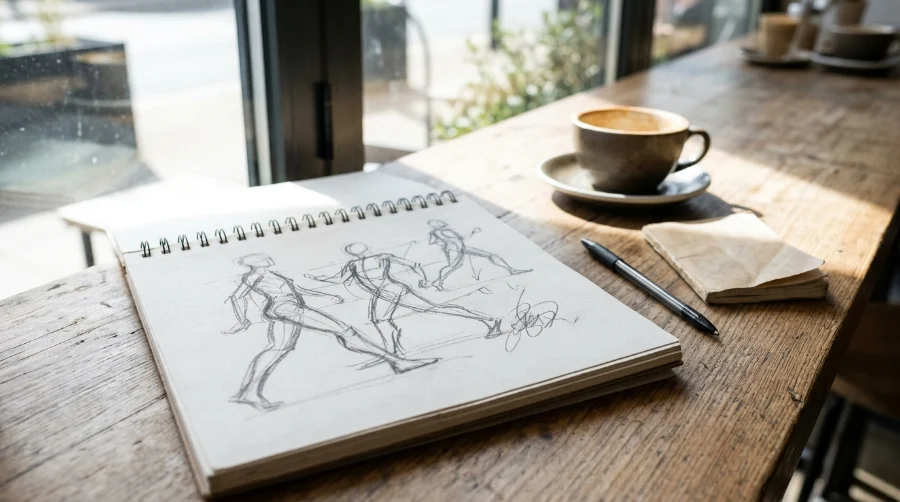
Most people who try to draw people are actually trying to draw an accurate set of outlines, and that is why the results feel stiff. The outlines of a person in…
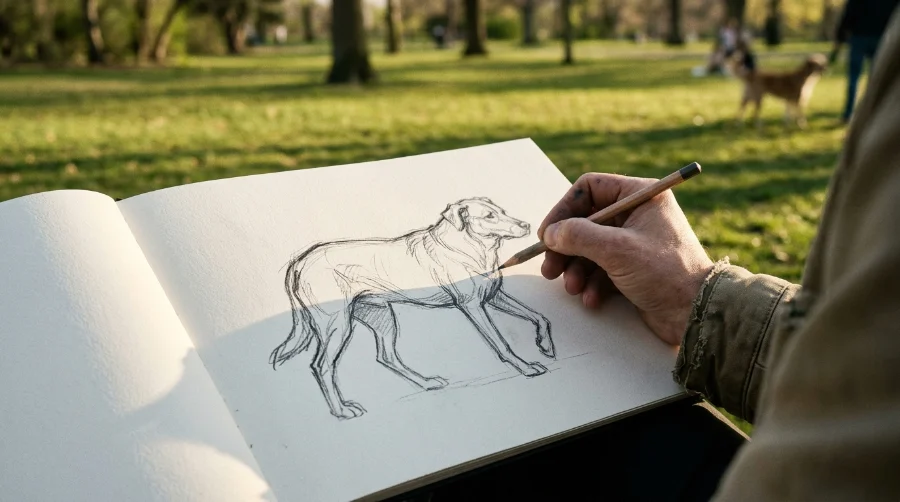
Drawing a person is difficult partly because you know what people look like and expect your drawing to be judged against that expectation. Drawing an animal is…
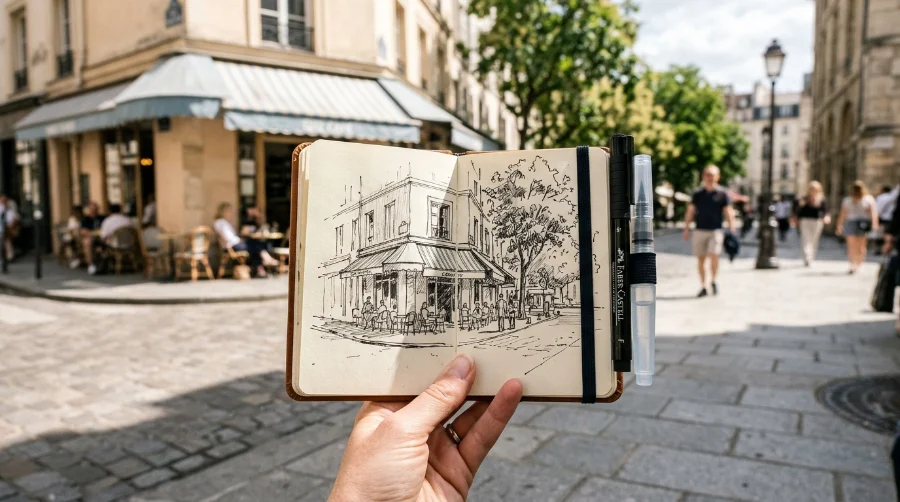
Urban sketching is the practice of drawing on location, in the street, quickly and with limited equipment. The appeal is obvious once you try it: the subject does…
Contour drawing is the practice of drawing a subject while looking at it continuously, without glancing down at the paper to check the line. It sounds like a small…
Other topics on the site.
Lines, shapes, proportion and edges — the mechanics underneath every drawing, and where most beginners get stuck first.
11 lessonsPerspective, composition, light and shade, volume — the principles that turn a recognizable outline into a drawing that holds up.
8 lessonsHue, value, saturation, temperature and harmony — how color behaves, and how to build a palette you can actually paint with.
7 lessonsStructured practice — a 30-day plan, ten-minute sessions, drawing from a window, and studying the masters without copying mindlessly.
5 lessonsGraphite grades, paper weight and tooth, brushes, ink and pen — what each material is actually for before you spend money on it.
8 lessonsUnderpainting, brush control, palette knife, scumbling, skin tones and drying times — the craft of putting paint down and controlling what happens next.
8 lessonsWater, washes, blooms, edges and transparent layers — the things that make watercolor behave like watercolor instead of like diluted gouache.
11 lessons