Mixing Natural Skin Tones for Painting
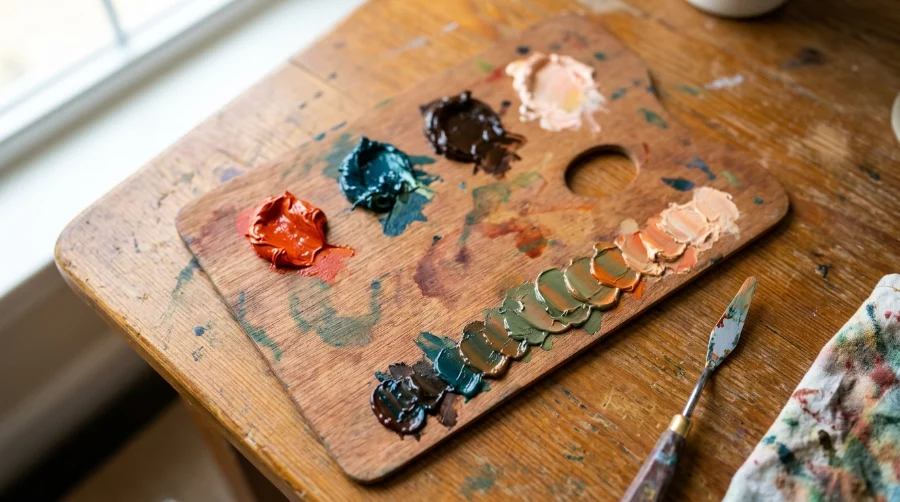
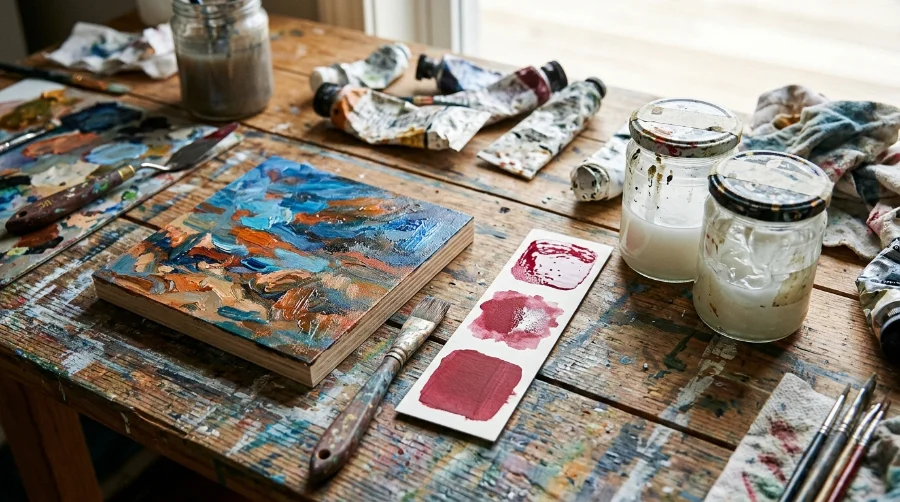
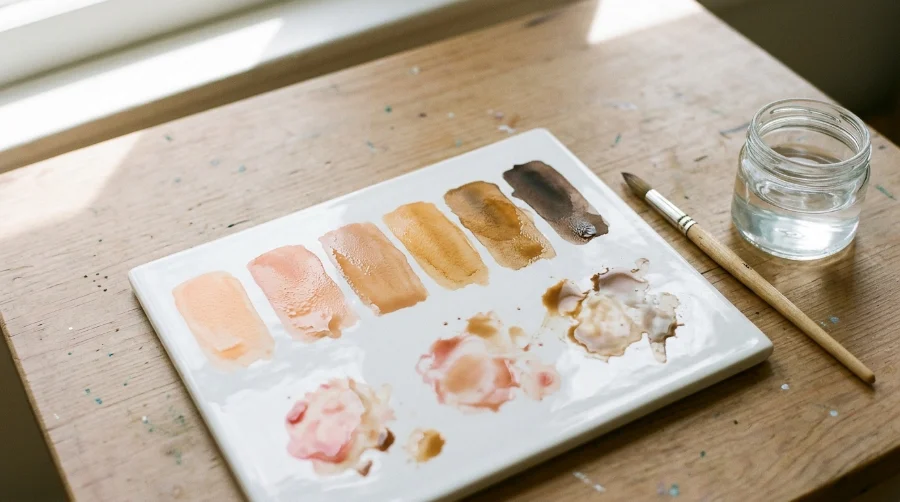
Skin is the hardest color to mix and the easiest to get wrong, and the reason is that most people approach it as a single color. Skin is never one color. It is a…
Underpainting, brush control, palette knife, scumbling, skin tones and drying times — the craft of putting paint down and controlling what happens next.
Skin is the hardest color to mix and the easiest to get wrong, and the reason is that most people approach it as a single color. Skin is never one color. It is a…
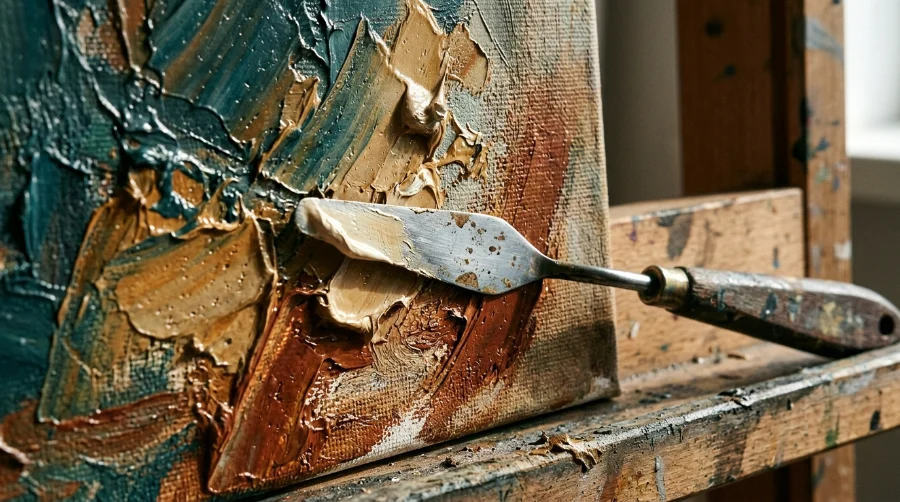
A palette knife is usually introduced as a tool for scraping paint off a palette or lifting unwanted marks. That undersells it. Used directly on the canvas, a knife…
Beginners reach for every color on the shelf, and the result is a painting full of unrelated hues that never quite agree. More colors do not mean more color. They…
Scumbling is the technique of dragging a thin layer of lighter color over a dry layer so that the color beneath shows through in broken, irregular patches. The…
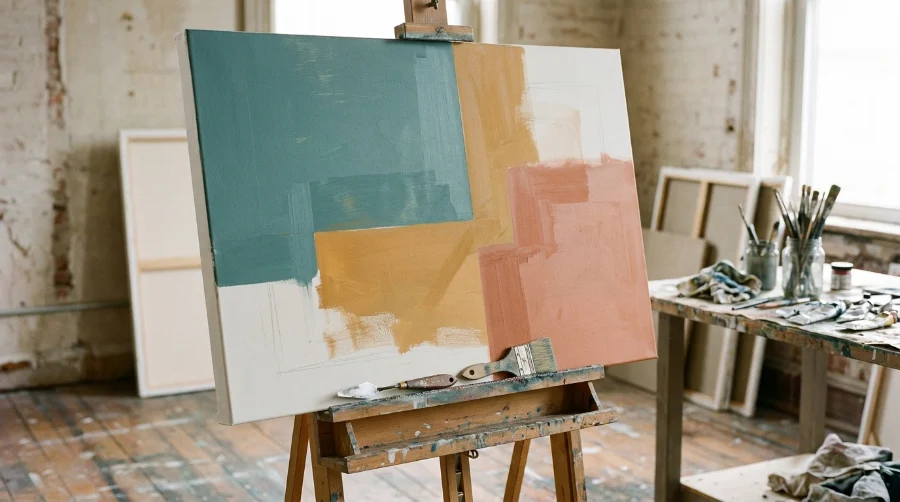
Abstract painting has a reputation for being either very easy or completely inaccessible. Both views come from the same misunderstanding, which is that abstract…
Ask a beginner why their painting is stuck and the answer is often that they do not know what happens to oil paint after it goes on the canvas. A painting is a…
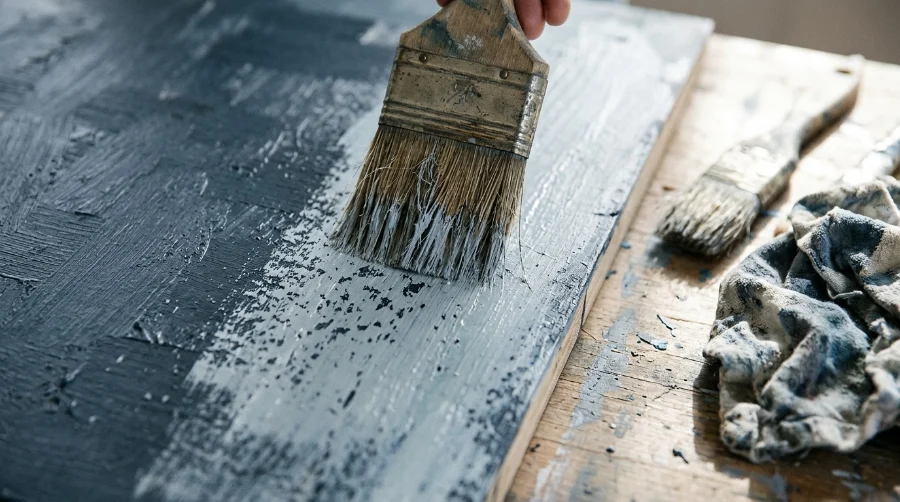
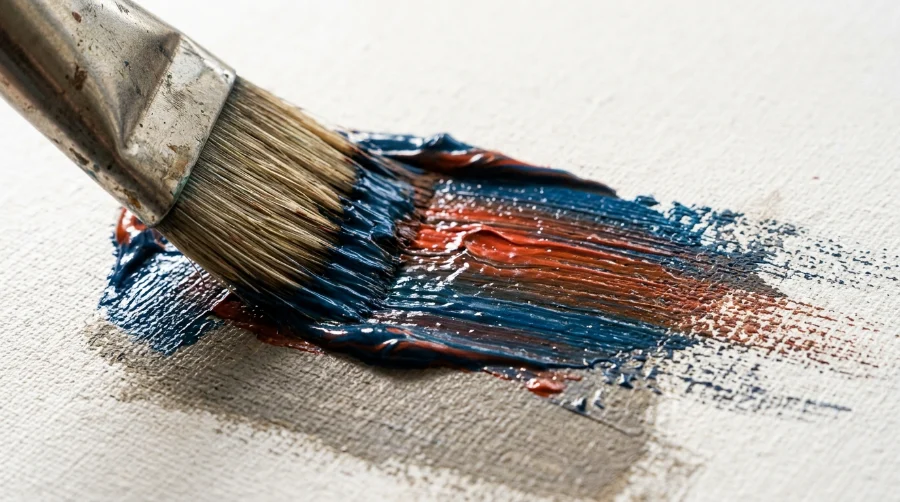
A brush does not have a personality, but it produces marks that behave like it has one. A flat wide brush loaded with oil can make a decisive stripe, a soft fog, or…
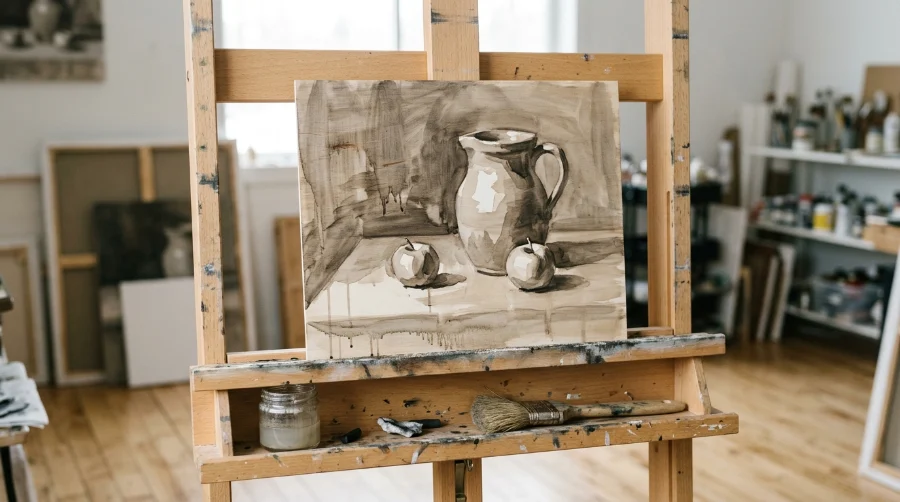
An underpainting is a monochrome painting laid down before the color work, and it exists for one reason: to force you to solve the painting's biggest problem before…
Other topics on the site.
Lines, shapes, proportion and edges — the mechanics underneath every drawing, and where most beginners get stuck first.
11 lessonsPerspective, composition, light and shade, volume — the principles that turn a recognizable outline into a drawing that holds up.
8 lessonsHue, value, saturation, temperature and harmony — how color behaves, and how to build a palette you can actually paint with.
7 lessonsGesture, contour, urban sketching, animals and drapery — capturing what you see while it is still moving.
10 lessonsStructured practice — a 30-day plan, ten-minute sessions, drawing from a window, and studying the masters without copying mindlessly.
5 lessonsGraphite grades, paper weight and tooth, brushes, ink and pen — what each material is actually for before you spend money on it.
8 lessonsWater, washes, blooms, edges and transparent layers — the things that make watercolor behave like watercolor instead of like diluted gouache.
11 lessons