Choosing a Viewpoint and Drawing One Subject From Many Angles
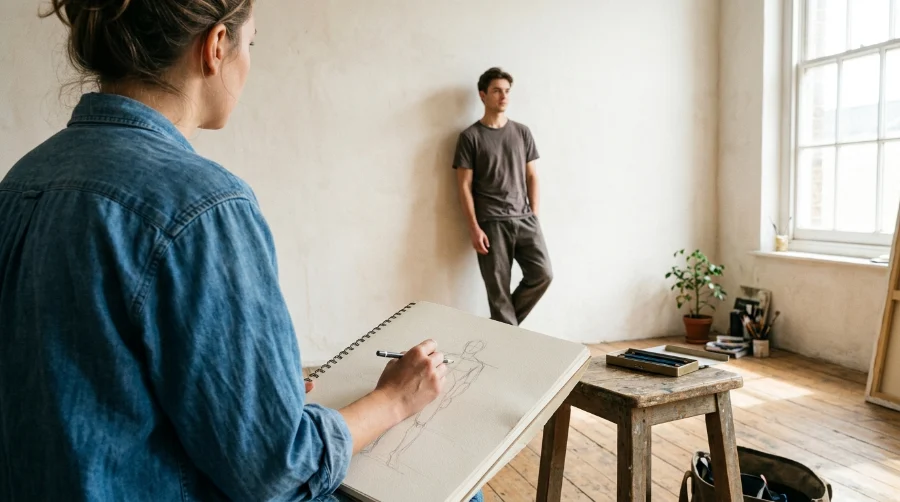
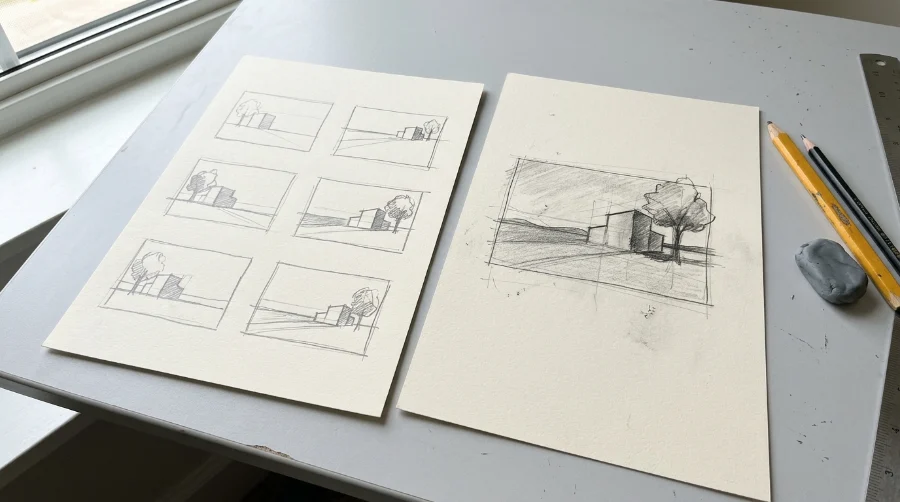
Most people draw the same subject the same way for years without noticing. They sit in front of it, they draw what they see, and they never find out what it looks…
Perspective, composition, light and shade, volume — the principles that turn a recognizable outline into a drawing that holds up.
Most people draw the same subject the same way for years without noticing. They sit in front of it, they draw what they see, and they never find out what it looks…
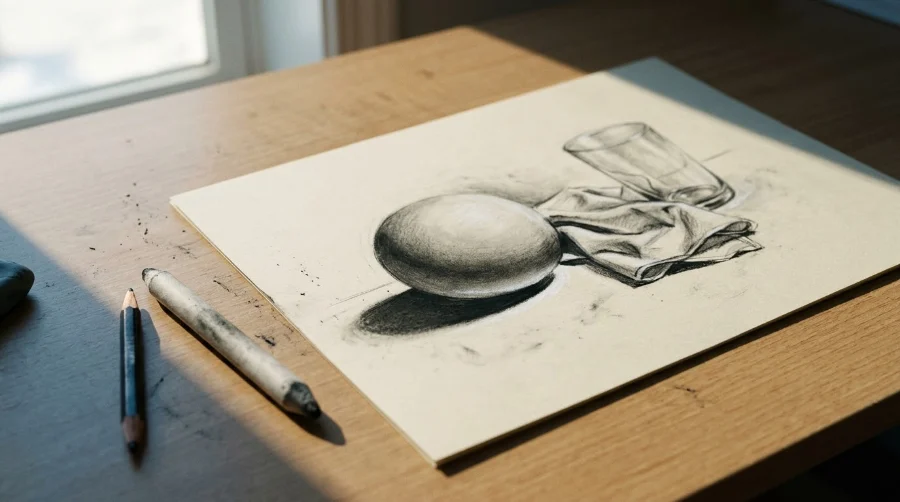
A sphere drawn with a gradient from light to dark reads as a flat disc with a smudge on it. The same sphere drawn with a light source in mind reads as a ball. The…
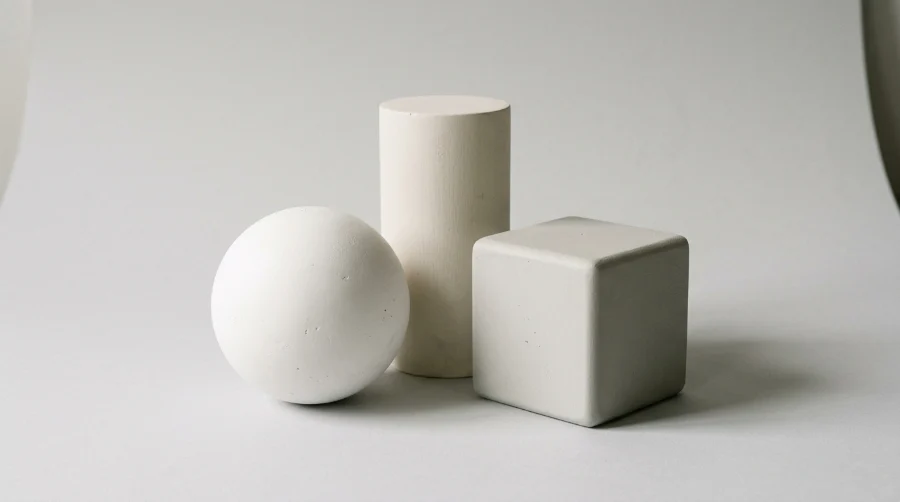
The most common way a beginner's drawing goes wrong is not in the detail. It is in the fact that the objects look flat. A mug is drawn as an outline of a mug. A box…
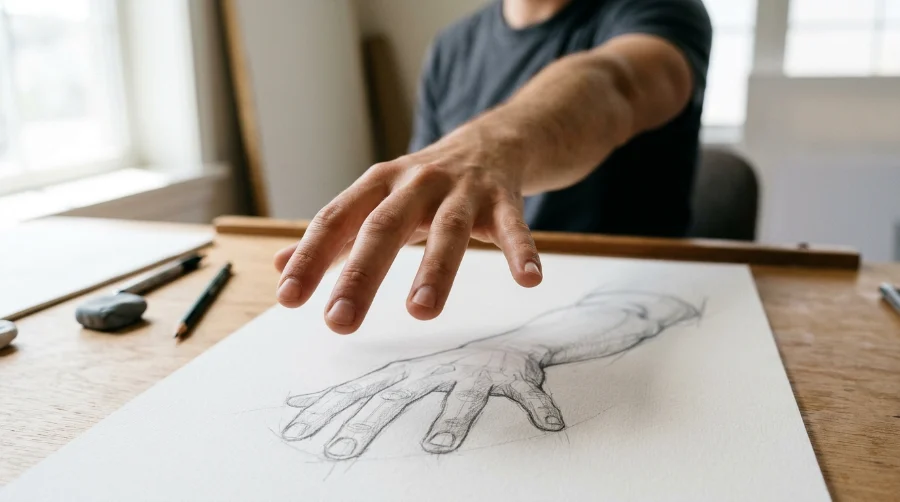
Anatomy is not the memorization of muscle names. It is a working knowledge of how the body is put together, and it only needs to be good enough to get a drawing…
Hold a pencil out in front of you with the point facing your eye. The pencil looks absurdly short, far shorter than a pencil, and the reason is that you are seeing…
Rhythm is the sense of movement that a picture creates, and it is built out of repetition. A row of identical windows is not interesting as a row of windows, but it…
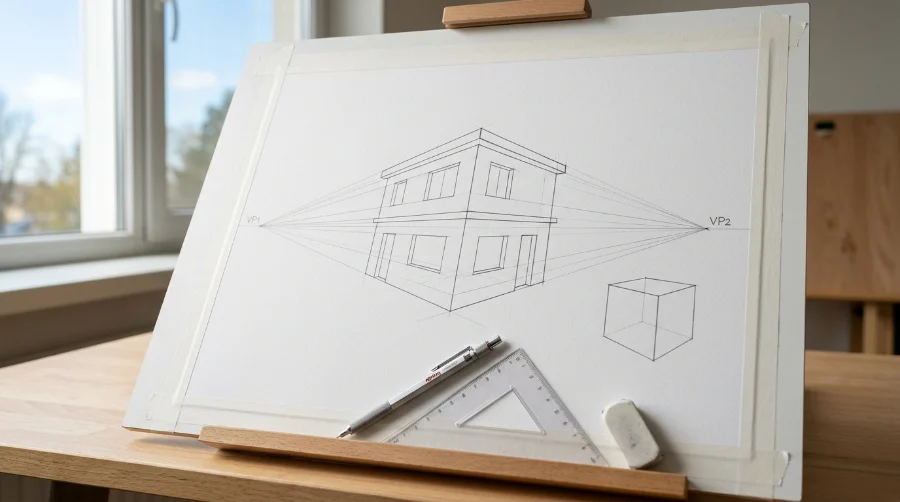
Perspective is the system that lets you draw a three-dimensional world on a flat piece of paper. It is not a set of tricks for drawing boxes. It is a description of…
There is a particular kind of frustration that comes from finishing a painting and only then seeing the problem. The shapes are fine, the values are close, the…
Other topics on the site.
Lines, shapes, proportion and edges — the mechanics underneath every drawing, and where most beginners get stuck first.
11 lessonsHue, value, saturation, temperature and harmony — how color behaves, and how to build a palette you can actually paint with.
7 lessonsGesture, contour, urban sketching, animals and drapery — capturing what you see while it is still moving.
10 lessonsStructured practice — a 30-day plan, ten-minute sessions, drawing from a window, and studying the masters without copying mindlessly.
5 lessonsGraphite grades, paper weight and tooth, brushes, ink and pen — what each material is actually for before you spend money on it.
8 lessonsUnderpainting, brush control, palette knife, scumbling, skin tones and drying times — the craft of putting paint down and controlling what happens next.
8 lessonsWater, washes, blooms, edges and transparent layers — the things that make watercolor behave like watercolor instead of like diluted gouache.
11 lessons