Analogous, Complementary, and Split-Complementary Color Schemes
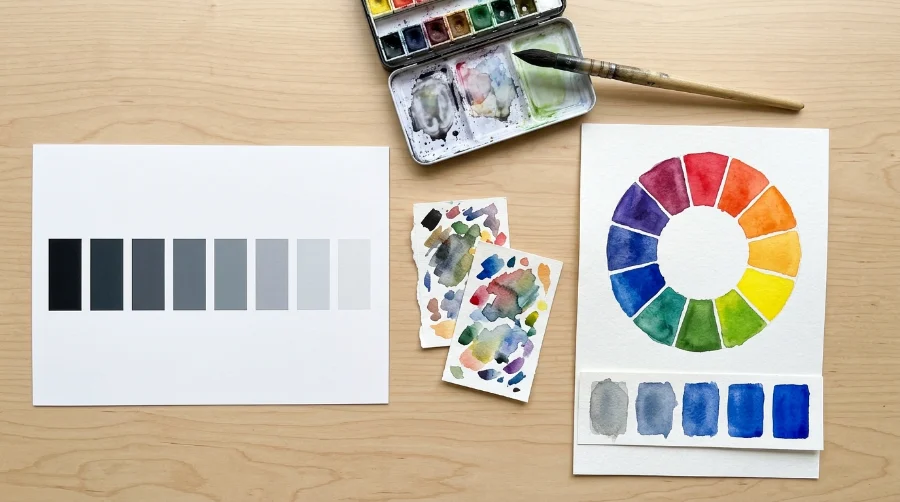
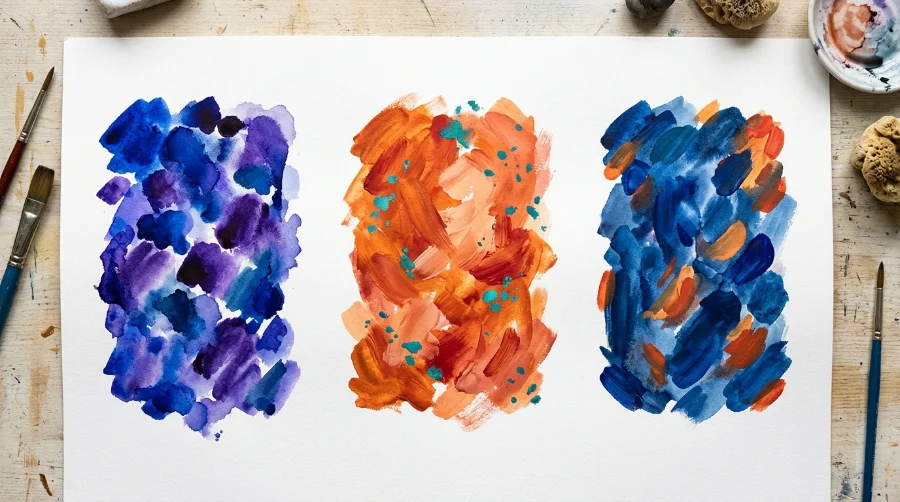
A color scheme is simply a plan for which colors you are going to use in a painting. Beginners often treat the palette as a place where a pile of colors happens to…
Hue, value, saturation, temperature and harmony — how color behaves, and how to build a palette you can actually paint with.
A color scheme is simply a plan for which colors you are going to use in a painting. Beginners often treat the palette as a place where a pile of colors happens to…
People often say that color sets the mood of a painting, and the phrase sounds vague until you look at how consistently it works. Warm colors tend to advance and…
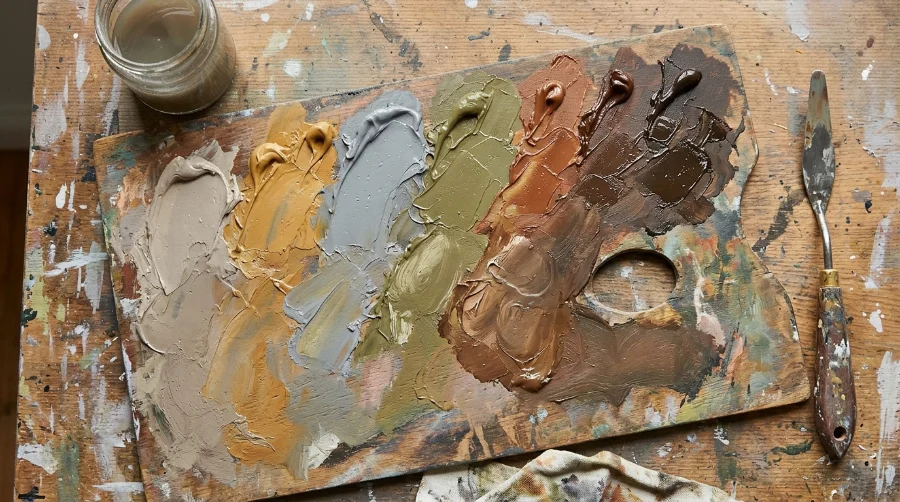
Earth tones and neutrals are the colors most beginners avoid and most paintings depend on. They are the quiet colors, the ones that let bright color read as bright…
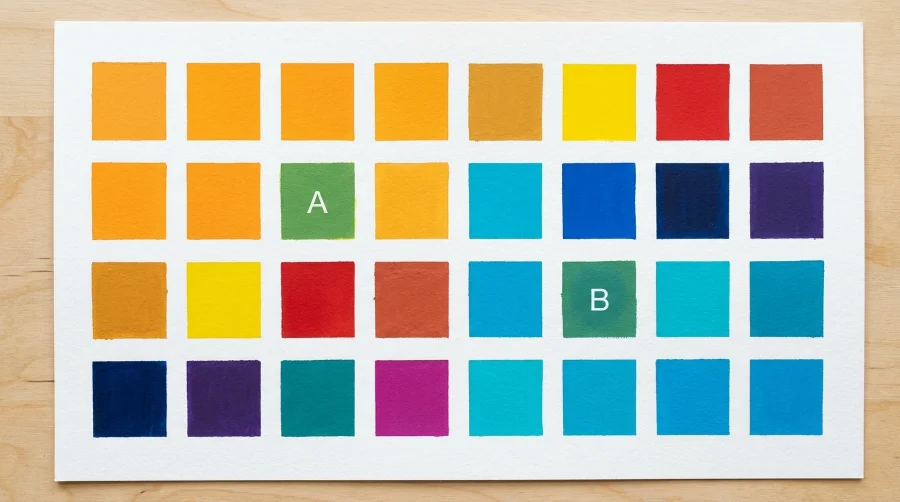
A color never appears on its own. Every time you look at a color, your eye is also comparing it to the colors immediately around it, and that comparison changes how…
Temperature is the one property of color that has almost as much to do with mood as with description. A yellow reads as warm and a blue reads as cool, but the far…
Most people who mix colors are working from instinct. They add a little more of this, a little less of that, and judge the result by whether it looks right…
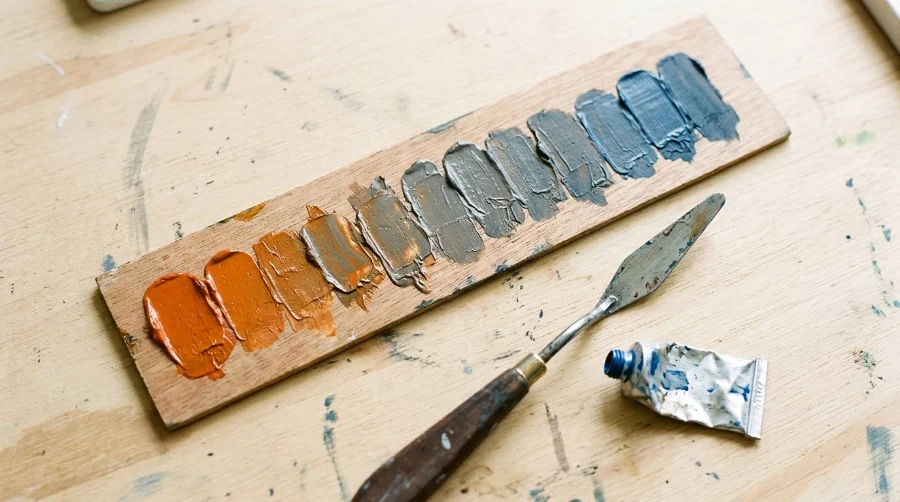
Mixing two complementary colors is the fastest way to make a beautiful color disappear. A blue and an orange, a red and a green, a yellow and a violet: together…
Other topics on the site.
Lines, shapes, proportion and edges — the mechanics underneath every drawing, and where most beginners get stuck first.
11 lessonsPerspective, composition, light and shade, volume — the principles that turn a recognizable outline into a drawing that holds up.
8 lessonsGesture, contour, urban sketching, animals and drapery — capturing what you see while it is still moving.
10 lessonsStructured practice — a 30-day plan, ten-minute sessions, drawing from a window, and studying the masters without copying mindlessly.
5 lessonsGraphite grades, paper weight and tooth, brushes, ink and pen — what each material is actually for before you spend money on it.
8 lessonsUnderpainting, brush control, palette knife, scumbling, skin tones and drying times — the craft of putting paint down and controlling what happens next.
8 lessonsWater, washes, blooms, edges and transparent layers — the things that make watercolor behave like watercolor instead of like diluted gouache.
11 lessons