Blending Graphite for Smooth Gradients and Soft Edges
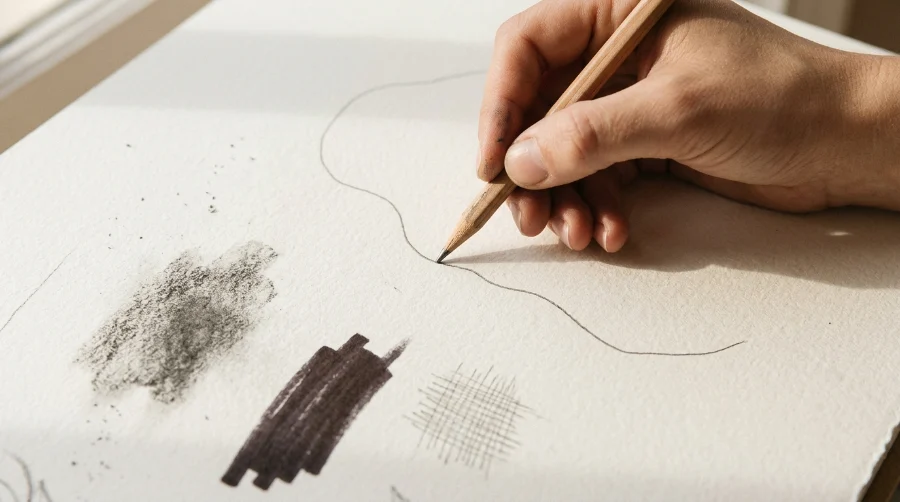
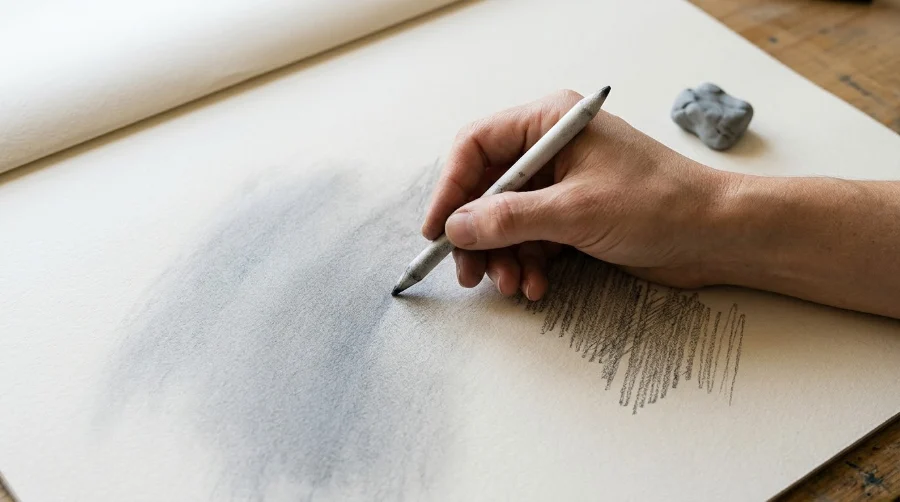
Graphite is the most forgiving medium in drawing, and one of the most poorly understood. Beginners tend to treat the full range of the pencil as a set of seven or…
Lines, shapes, proportion and edges — the mechanics underneath every drawing, and where most beginners get stuck first.
Graphite is the most forgiving medium in drawing, and one of the most poorly understood. Beginners tend to treat the full range of the pencil as a set of seven or…
Almost every drawing that looks wrong looks wrong in the same way. A head ends up too small for the body, a mug looks squat, a chair ends up with legs of unequal…
Two drawings can describe the same object with the same accuracy and feel completely different. One of them feels calm, the other feels tense. The difference…
Beginners draw the object and stop. The mug gets drawn, and everything around the mug is treated as empty paper that does not matter. Experienced artists do the…
Most people who learn to draw are told to look carefully, and the advice is correct. It is also incomplete. Observation training sharpens the eye, but observation…
Symmetry is one of those subjects that sounds easy and is not, because the temptation is to draw one half and assume the other half will follow. It will not…
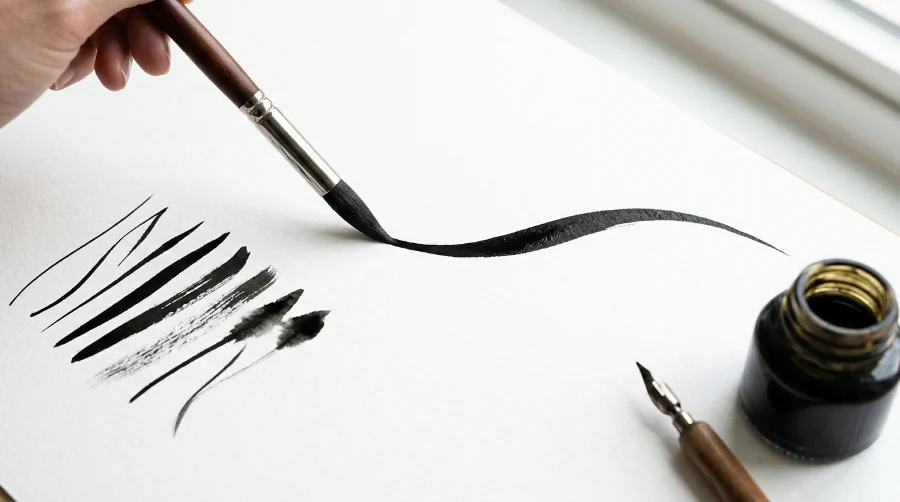
Pen and ink is the fastest way to make a drawing that reads clearly from across a room. The medium rewards decisions instead of corrections, which means it asks you…
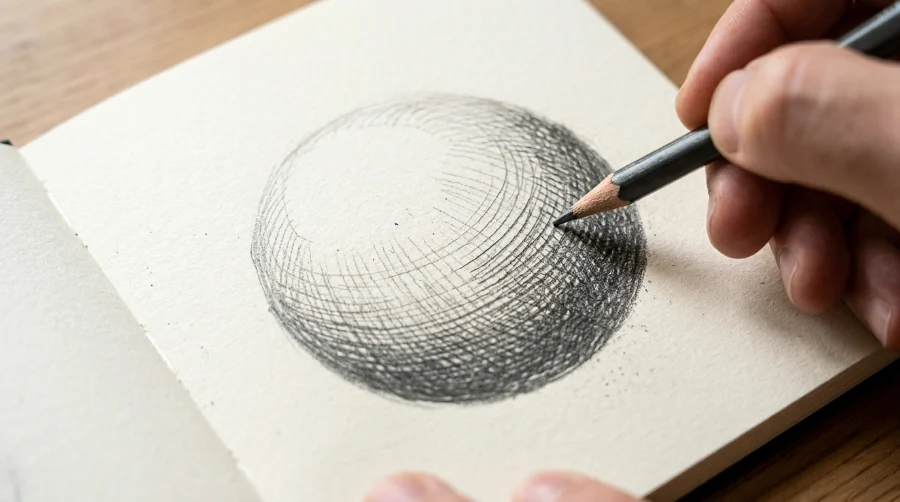
Hatching is the simplest way to make a drawing go flat, and it is also one of the easiest to overuse. A beginner who has learned that lines can create tone tends to…
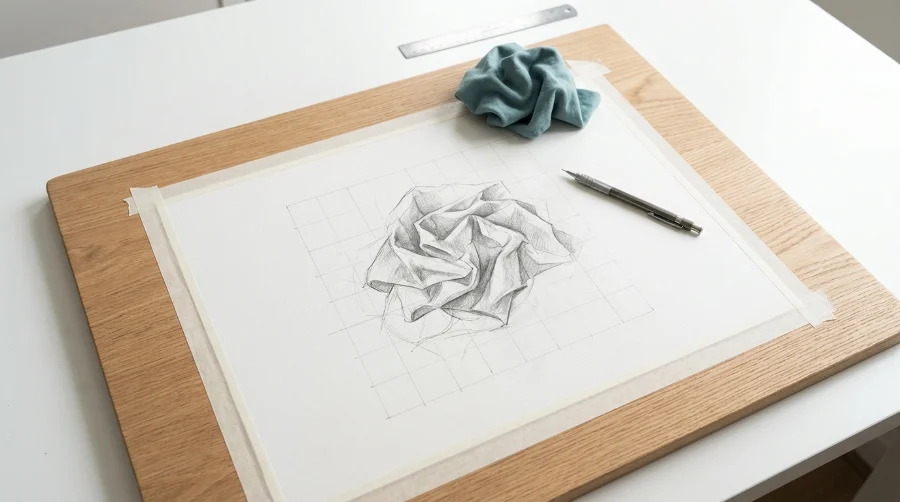
The grid method is the technique most beginners encounter and then abandon. It is described as drawing over a photo with a grid, and it is genuinely useful, but the…
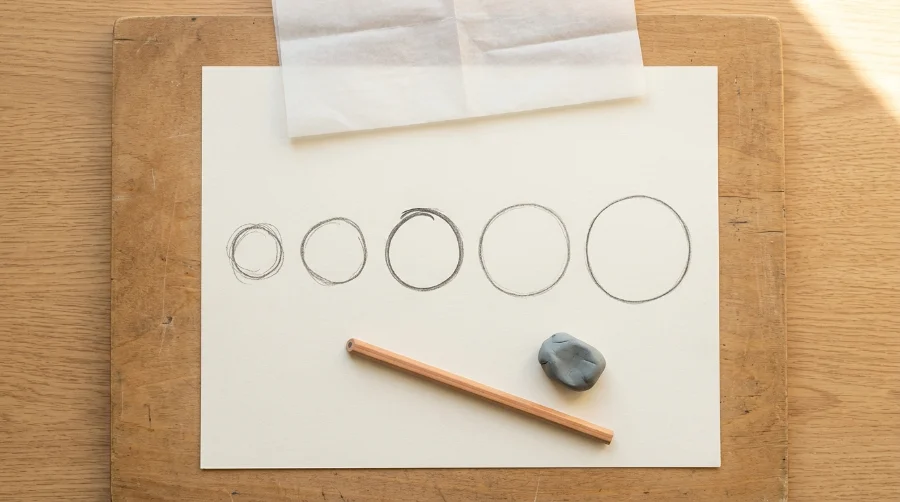
Almost every drawing problem begins as a circle problem. Before you can draw a head, a cylinder, a pot, or a wheel, your hand has to be able to send a line around…
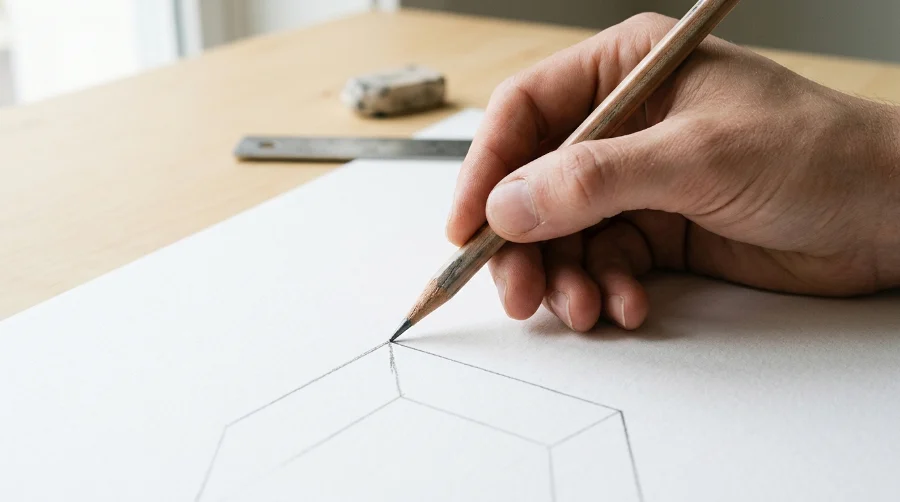
Straight lines are the first thing beginners ask about and the last thing they stop worrying about. The question almost always comes with the same assumption: that…
Other topics on the site.
Perspective, composition, light and shade, volume — the principles that turn a recognizable outline into a drawing that holds up.
8 lessonsHue, value, saturation, temperature and harmony — how color behaves, and how to build a palette you can actually paint with.
7 lessonsGesture, contour, urban sketching, animals and drapery — capturing what you see while it is still moving.
10 lessonsStructured practice — a 30-day plan, ten-minute sessions, drawing from a window, and studying the masters without copying mindlessly.
5 lessonsGraphite grades, paper weight and tooth, brushes, ink and pen — what each material is actually for before you spend money on it.
8 lessonsUnderpainting, brush control, palette knife, scumbling, skin tones and drying times — the craft of putting paint down and controlling what happens next.
8 lessonsWater, washes, blooms, edges and transparent layers — the things that make watercolor behave like watercolor instead of like diluted gouache.
11 lessons