Painting Techniques
Mixing Natural Skin Tones for Painting
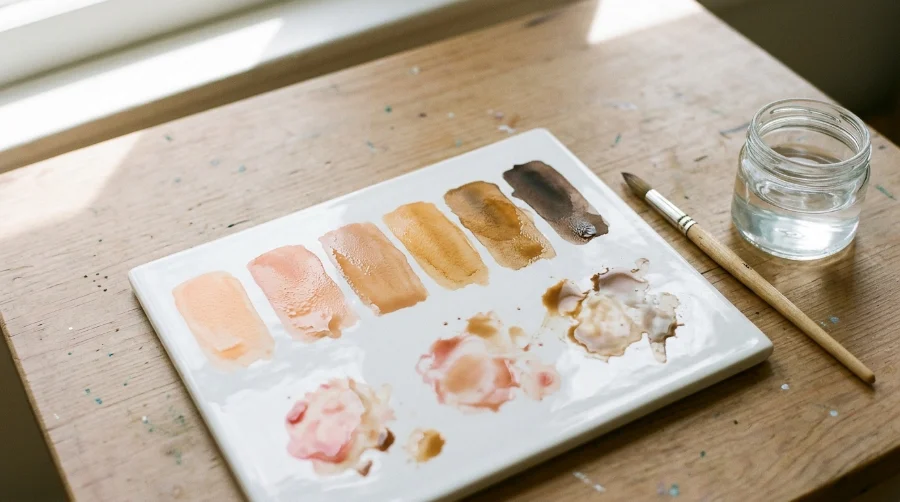
Skin is the hardest color to mix and the easiest to get wrong, and the reason is that most people approach it as a single color. Skin is never one color. It is a…
Scumbling is the technique of dragging a thin layer of lighter color over a dry layer so that the color beneath shows through in broken, irregular patches. The…
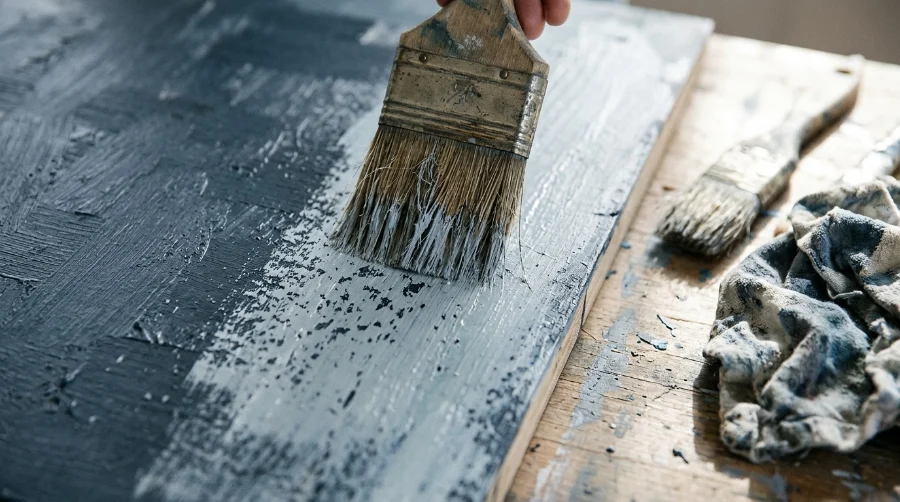
Scumbling is the technique of dragging a thin layer of lighter color over a dry layer so that the color beneath shows through in broken, irregular patches. The lower layer peeks through as flecks and gaps, and the result is a soft, atmospheric texture that no smooth blend can produce.
You have seen it in old barn paint, in weathered stone, in the rims of old paintings where a pale gray has been dragged across a dark underlayer, and in the broken colors of the Impressionists. It is also the fastest way to give a flat passage life, because it adds visual interest without adding a new shape.
The lower layer must be completely dry. A thin, relatively stiff color is dragged over it with a brush that is barely touching the surface. Where the brush skips over the texture of the lower paint, the lower color shows. Where the brush makes contact, the upper color sits on top, and because it is thin, it allows some of the color beneath to influence it.
The result sits somewhere between the two layers, and it is optically lighter and cooler than either one alone. That optical mixing is what makes scumbled color look luminous rather than muddy.
Two conditions have to be met for it to work, and beginners usually fail one of them:
Not every combination produces visible broken color. The upper color needs to be lighter than the lower one to be visible at all, and the pair needs some contrast in hue or temperature.
Combinations that reliably produce it:
Combinations that will not: white over dark yellow, since white is lighter but the value difference is not enough to read cleanly at a normal viewing distance, and any light color over a near-black lower layer in a thick application.
The best result usually comes from a lower layer that is fairly saturated and a top layer that is desaturated and light. The top color then reads as light and airy while the lower one glows through.
Scumbling wants a brush that will skip rather than smear. A stiff bristle brush, a flat brush used on its edge, or an old brush with splayed bristles all work. A soft round brush loaded with a stiff color will mostly just lay paint down evenly, though it can produce a softer version of the effect.
On a textured surface the effect is automatic, because the brush catches on the high points and misses the valleys. Cold press paper, rough canvas, and a heavily textured panel give a strong broken effect. Hot press paper and smooth canvas need more force and a stiffer brush, and the effect will be subtler.
Gesso or another absorbent ground on panel or canvas also works well, since the upper color sinks into the high spots and catches on the edges of the texture.
One important note: scumbling only breaks up a layer that is genuinely broken. If the lower layer is smooth and even, the scumble will produce a smooth, slightly lighter haze instead. To get visible flecks, the layer underneath must have texture of its own, which is why scumbling over a smooth underpainting often disappoints beginners.
Oil is the traditional medium. The upper paint needs to be stiff enough to hold on the brush tip and dry on the lower layer without sinking in. Face color, lead white mixed with a touch of the complementary, and unburnt umber all work well as scumbling colors.
Acrylic works, but faster. Acrylic dries quickly, so the lower layer can be ready in minutes, and the upper color can be thinned with a little medium to help it stay open longer. Since acrylics are usually more opaque than oils, the upper color needs to be quite thin or it will simply cover.
Gouache is well suited to scumbling, because it dries to a matte, chalky surface that catches the brush. Traditional gouache is very opaque, so the top color must be diluted considerably.
Watercolor can produce a similar effect, called dry brush, by dragging a nearly dry brush over a dry wash. It is the same principle with a different binder, and it is especially good for foliage, rock textures, and dry grass.
Scumbling works best where a real surface is being described: the haze over distant hills, the bloom on old paint, rough stone, weathered wood, foliage catching light, sand, snow with texture, or the faded surface of a sign.
It is also useful as an atmospheric tool in landscapes. A thin scumble of a cool pale color over the lower half of a distant hill pushes it back, and repeated scumbles build up aerial perspective very efficiently.
One last use worth knowing: scumbling is a good way to soften an area without making it flat. A smooth blend reads as a flat plane, while a scumbled transition reads as a surface, which is usually more convincing.
Lessons that pair well with this one.
Skin is the hardest color to mix and the easiest to get wrong, and the reason is that most people approach it as a single color. Skin is never one color. It is a…
A palette knife is usually introduced as a tool for scraping paint off a palette or lifting unwanted marks. That undersells it. Used directly on the canvas, a knife…
Beginners reach for every color on the shelf, and the result is a painting full of unrelated hues that never quite agree. More colors do not mean more color. They…