Rhythm is the sense of movement that a picture creates, and it is built out of repetition. A row of identical windows is not interesting as a row of windows, but it…
S SolvaHub Studio EditorsPublished July 30, 20255 min read1,120 words
Understanding Rhythm and Repetition in Art — the idea behind the technique, and where beginners usually go wrong.
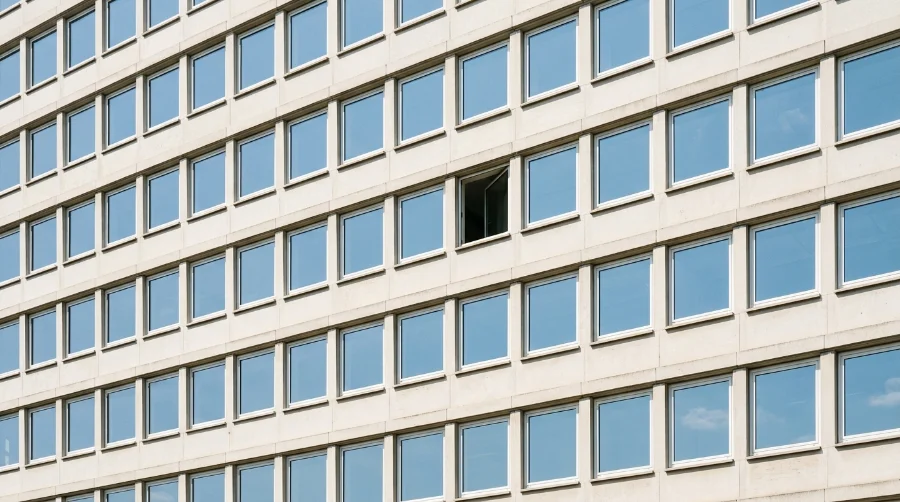
Rhythm is the sense of movement that a picture creates, and it is built out of repetition. A row of identical windows is not interesting as a row of windows, but it is interesting as rhythm, because the eye starts to travel along it and predict what comes next.
This is one of the oldest ideas in art, and it applies everywhere from architecture and textiles to photography and painting.
How repetition creates rhythm
Rhythm needs three things: a repeated element, a direction, and a sense of order.
The repeated element can be anything. A shape, a color, a line, a mark, a shadow, or an entire object.
The direction is the path the eye follows. Repetition in a straight horizontal line reads as calm and stable. The same marks in a diagonal read as movement.
The order decides whether the rhythm is regular or irregular. Evenly spaced elements produce a steady beat. Uneven spacing produces a syncopated, more energetic feel.
This is why a row of trees along a road produces a different feeling depending on the spacing. Evenly spaced trees feel formal and planted. Irregular spacing feels organic and alive.
Types of rhythm
Regular rhythm uses even spacing and repeated identical elements. It reads as stable, orderly, and calm, and it appears in architecture, grid patterns, and classical composition.
Flowing rhythm uses elements that curve and change direction, like waves, ripples, or drapery folds. It reads as gentle and continuous.
Progressive rhythm changes the repeated element in a controlled way each time, such as a shape that grows larger or a color that gets brighter. It creates a sense of development and is a reliable way to lead the eye through a composition.
Random rhythm scatters elements without an obvious order. It reads as busy, energetic, or chaotic, and it works well for foliage, crowds, and texture.
Alternating rhythm repeats two or more elements in turn. This is the basis of most patterns and is very useful for borders and backgrounds.
Rhythm in painting
Painters use rhythm to unify a composition and to direct attention.
Repeating a shape at different scales ties the foreground to the background and prevents the picture from falling into separate zones.
Repeating a color in a small shape in the foreground and a large shape in the background creates a visual thread between them.
Using rhythm in a broken series, such as a row of trees where each is drawn slightly differently, keeps a repetitive subject from becoming mechanical.
Letting one rhythm interrupt another. A calm horizontal band of sea crossed by a diagonal of breaking waves creates interest from the conflict.
Repeating a mark to build texture. Consistent marks make a surface read as a single material.
The point is not to make everything repeat. The point is that repetition creates expectation, and expectation creates the movement that makes a picture feel alive rather than static.
Rhythm in drawing
Drawing is where rhythm is easiest to control and easiest to lose.
Contour lines that curve in and out along a form create a flowing rhythm that follows the volume.
Hatching in one direction creates a directional rhythm that reinforces the surface.
Crosshatching breaks the direction and adds tension, which is why it reads as rougher and darker.
Repeated short strokes in a shape create a texture rhythm that describes the material.
A single long line crossing a drawing creates a rhythm that cuts across everything else, and it needs to earn that position.
A drawing often looks dead because the lines all have the same weight, the same length, and the same spacing. Introducing one change in rhythm, such as a long slow curve among short quick marks, changes the whole feeling.
Pattern and its limits
Pattern is repetition with a boundary. It can be used well and badly, and the difference is usually about whether the pattern is subordinate to the subject.
When a pattern supports the subject, it describes a surface or a background without competing with the focal point.
When it competes, the viewer cannot tell what the picture is about. This happens most often when a pattern is placed behind a face or a central object in a busy, high contrast form.
Varying scale within a pattern suggests depth, since larger elements appear closer.
Breaking a pattern once creates emphasis. A single different element in an otherwise regular field pulls the eye immediately.
Simplifying a pattern is more effective than enriching it. Most beginner pattern work is too busy because each repeat was designed individually instead of being treated as a unit.
Rhythm and structure in a picture
Rhythm does more than add interest. It is one of the main ways a composition achieves structure, because repeated elements give the eye a path to follow and a way to find its way back to the beginning.
A repeated shape at a decreasing size creates depth, because smaller forms read as further away.
A repeated color that appears at both the start and the end of a path closes the composition rather than leaving it open.
An uneven rhythm in a horizontal band of trees or windows creates interest without breaking the underlying order.
Two rhythms of the same kind in different directions create a woven surface, and the eye moves between them rather than along one.
A composition without any repeated element often feels scattered, because nothing gives the eye a handle. Adding one repeated shape, in two or three places, is usually enough to hold the picture together.
Common mistakes
Repeating identical elements with no variation. The result looks mechanical and lifeless.
Too many rhythms competing. Three or four strong patterns in one picture is already a lot.
Irregular spacing used by accident. If the spacing is irregular because it was not planned, it reads as a mistake rather than as energy.
Breaking the rhythm at the wrong point. The interruption has to land where you want attention.
Confusing texture with rhythm. Texture is about surface, rhythm is about movement. A rough surface can have no rhythm at all.
Exercises
One mark, four rhythms. Draw the same repeated mark horizontally, diagonally, in a curve, and irregularly.
Progressive scale. Repeat a shape at increasing sizes along a path and see where the eye travels.
Break it once. Make a regular pattern and change only the fifth element.
Rhythm and interruption. Combine two different rhythms, horizontal and diagonal, and see where the conflict occurs.
Rhythm is the reason some drawings feel calm and others feel nervous, and it is usually a matter of spacing and direction rather than of skill. Learning to see repetition in a subject gives you a way to make almost any composition feel organized.
S
SolvaHub Studio Editors
We teach drawing and painting from the ground up — line and shape, perspective and value, color and pigment, and the practice that turns all of it into skill. Every lesson is written around a real difficulty, tested on real materials, and edited for clarity before it goes live. If something here helps, the contact page is the fastest way to tell us.
Most people draw the same subject the same way for years without noticing. They sit in front of it, they draw what they see, and they never find out what it looks…
A sphere drawn with a gradient from light to dark reads as a flat disc with a smudge on it. The same sphere drawn with a light source in mind reads as a ball. The…
The most common way a beginner's drawing goes wrong is not in the detail. It is in the fact that the objects look flat. A mug is drawn as an outline of a mug. A box…