Art Materials
Drawing With Ink and Pen Tools and Techniques
Choosing a pen sounds trivial, since any of them will put a line on paper. It is not trivial, because the pen determines what kind of line you can make, how fast…
Paper is the one material in a drawing or painting that most people choose by accident. They use whatever is in the sketchbook they happen to own, or the cheapest…
Paper is the one material in a drawing or painting that most people choose by accident. They use whatever is in the sketchbook they happen to own, or the cheapest pad on the shelf, and then spend months wondering why the pencil feels wrong, why the wash dries with a hard edge, or why the paint keeps catching on a surface.
Every paper has three defining characteristics, and once you know what they are, choosing becomes straightforward.
These three work together. Heavier paper is usually more absorbent and more stable. Rougher paper is usually less absorbent, because the peaks hold the medium above the valleys.
Common weights and what they are actually good for:
For most people starting out, a sheet somewhere between 150 and 250 gsm handles almost everything they will want to do.
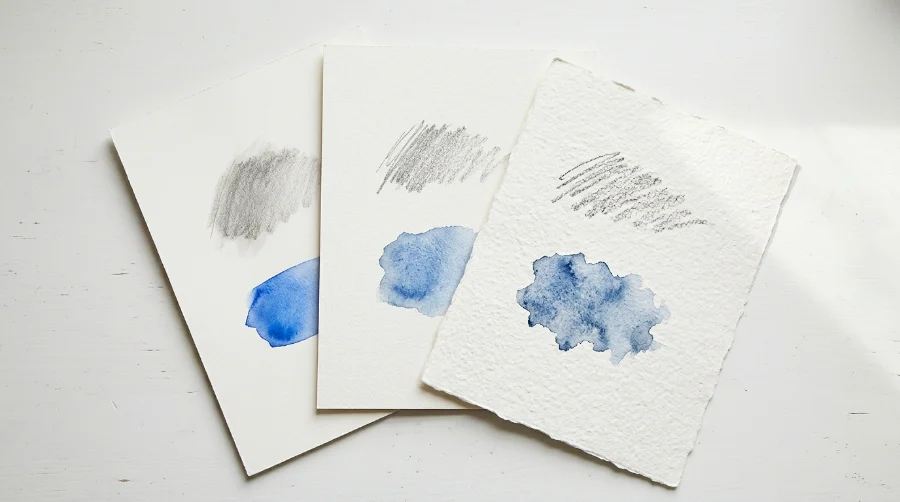
This is where the vocabulary gets confusing, because every brand calls its surfaces something different. What matters is the underlying texture.
Also called hot press, plate, or hot pressed paper. The surface is nearly flat, with a very fine tooth.
Often called cold press or rough, though the two are not the same. Cold press has a noticeable tooth of its own; rough has a pronounced texture.
Strongly textured, visible grain.
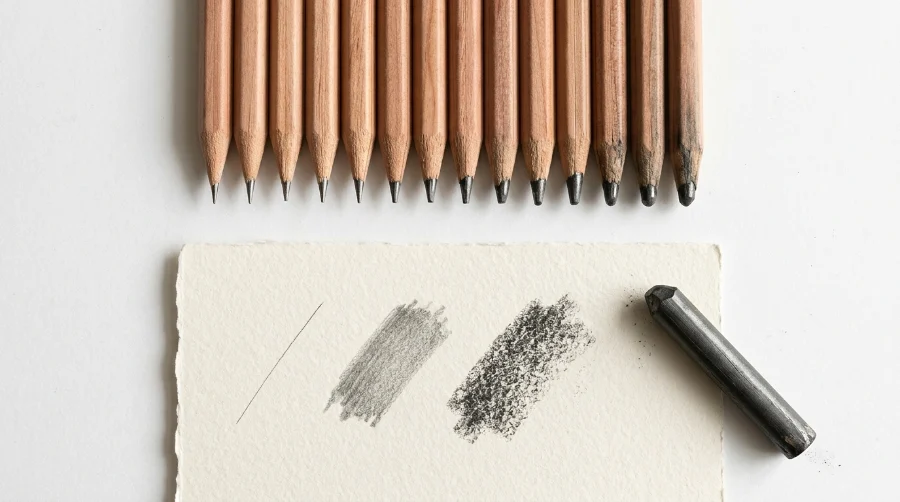
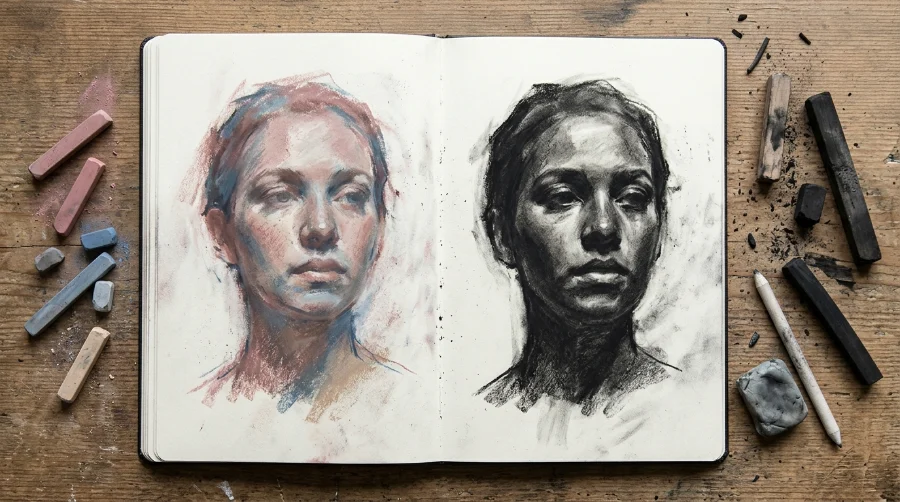
Smooth or medium surfaces for graphite, because you want the point to make contact and you want detail to be possible. Charcoal wants more tooth, since charcoal is a dry medium that needs something to catch on. Toned paper in gray, buff, or cream is popular for charcoal and white pencil work.
300 gsm cotton rag is the standard for serious work, with a medium surface for general use. Two qualities matter more than brand:
You can test sizing at home by laying down a small wash and watching the edge. If it stays crisp and the paper does not cockle, the sizing is doing its job.
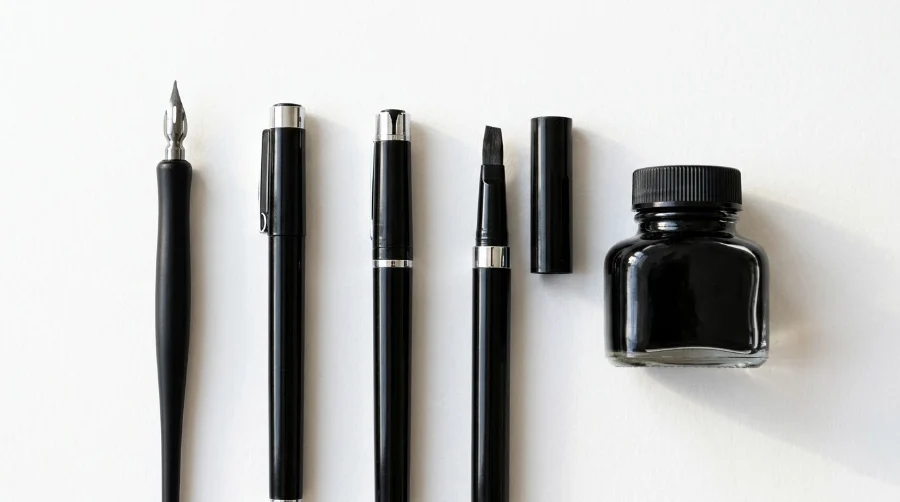
Smooth paper, almost always. Ink lines are unforgiving of texture, and a rough surface makes a pen line look broken. Also worth checking whether the paper is truly fountain pen safe, since some papers will feather with a wet ink.
Acrylic will adhere to most drawing papers, but a heavier sheet is much safer when you are using a lot of water, because thin paper buckles and the acrylic lifts. Canvas, board, and prepared panels are the conventional choices for these media, mainly for durability.
Very toothy surfaces. Pastel is a dry medium with almost no binder, and it needs tooth to hold onto. Very smooth paper will simply shed it.
Smooth, non-absorbent surfaces. Paper that absorbs marker ink will bleed and feather, and a rough surface will produce a scratchy, uneven line.
Sheet size matters more than most people expect, because it limits the kind of drawing you can make.
Sketchbooks that spiral or bind at the edge are convenient, and the binding is a real constraint: a sketchbook that cannot lie flat will never be worked on away from a desk, and most of the value of a sketchbook is that it goes with you.
For most people, three sheets cover almost everything:
Add a roll of inexpensive newsprint or copy paper underneath your working sheet for tracing and value studies, and for testing palettes.
Paper is not a trivial material to get right, but the decision only requires three pieces of information: weight, surface, and sizing. Once you can name those for the paper in front of you, you can predict how it will behave before you put a mark on it.
Lessons that pair well with this one.
Choosing a pen sounds trivial, since any of them will put a line on paper. It is not trivial, because the pen determines what kind of line you can make, how fast…
Almost every beginner owns a box of pencils and has no idea what the numbers on them mean. What they discover quickly is that the very soft pencils smudge, the very…
Charcoal and pastel are the two soft drawing media, and they are often treated as variations of the same idea. They behave very differently, and choosing correctly…