A sketchbook is the tool you will use more than any other, and most people choose one badly. They buy a beautiful book with thick creamy pages, fill six pages with…
S SolvaHub Studio EditorsPublished July 8, 20255 min read1,137 words
Choosing and Using a Sketchbook — the idea behind the technique, and where beginners usually go wrong.
A sketchbook is the tool you will use more than any other, and most people choose one badly. They buy a beautiful book with thick creamy pages, fill six pages with careful drawings, and then leave it on a shelf because the paper is wrong for how they actually work.
Choosing well comes down to three questions: what will you draw in it, where will you carry it, and how long do you want it to last.
Size and format
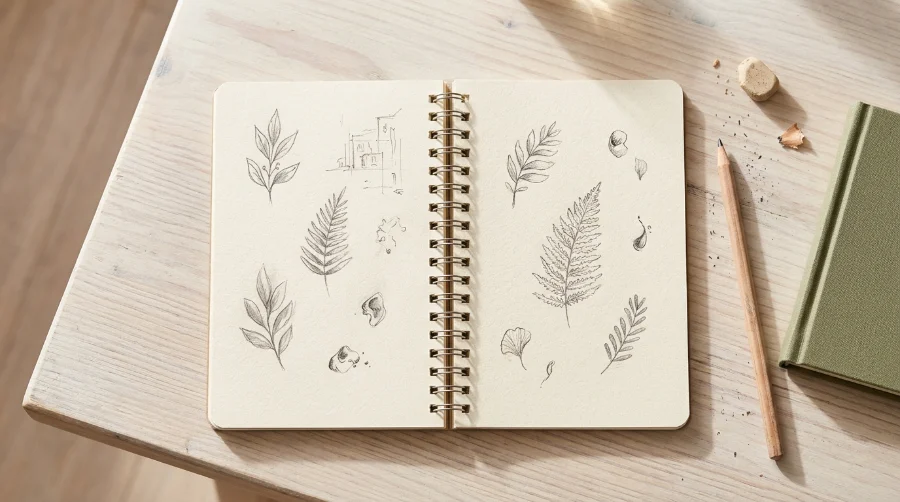
A small book, around five by seven inches, fits in a coat pocket or a bag and is the practical default for daily sketching. The page is big enough for a real drawing and small enough that you fill it.
A larger book suits longer work, life drawing, and anything where you want to spread out. The cost is that it stays at home, and a sketchbook at home gets used less than one in a bag.
A tall portrait format suits figures and full body work, and the narrow width makes it easy to turn the page without smudging what you have drawn.
A wide landscape format suits landscapes and quick page spreads.
A spiral bound book lies flat and can be folded back, which matters if you are working on your lap. A stitched or glued binding lies flatter and better but will not fold.
Wire bound and spiral bound sketchbooks have another advantage for travel: pages can be torn out and carried separately.
Paper weight
Paper weight is expressed in grams per square meter, and it is the factor people most often get wrong.
Around seventy grams is thin and light. It is pleasant for pencil work and quick sketches, and it is see-through enough that a drawing on one side shows faintly on the other.
Around one hundred grams is the standard for a general sketchbook. It handles pencil, pen, and light charcoal without feeling heavy, and it blocks most show-through.
Around one hundred fifty grams and above is closer to watercolor paper. It takes wet media, resists buckling, and feels substantial, but it is heavier to carry and takes ink more slowly.
If you intend to use any wet medium, go heavier. If you mostly use pencil and pen, a lighter book is more pleasant to carry and the pages turn more easily.
Surface
This is what determines how the medium behaves, and it is the detail that causes most disappointment.
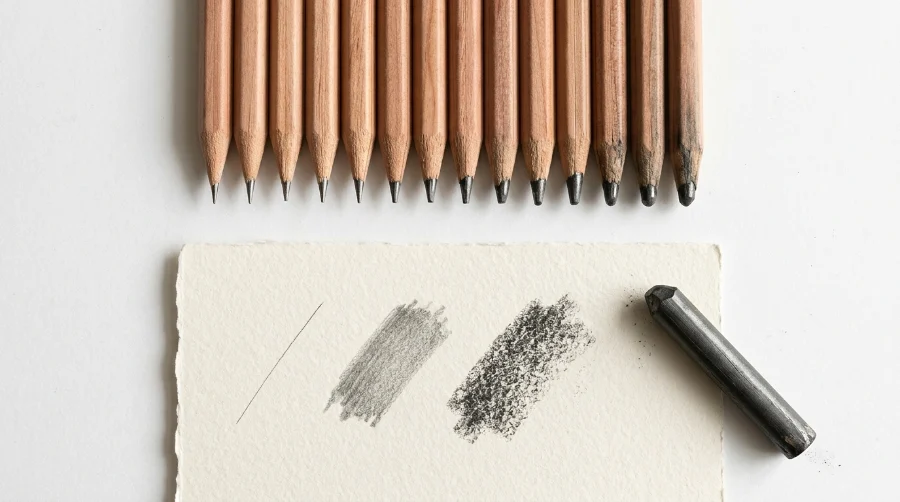
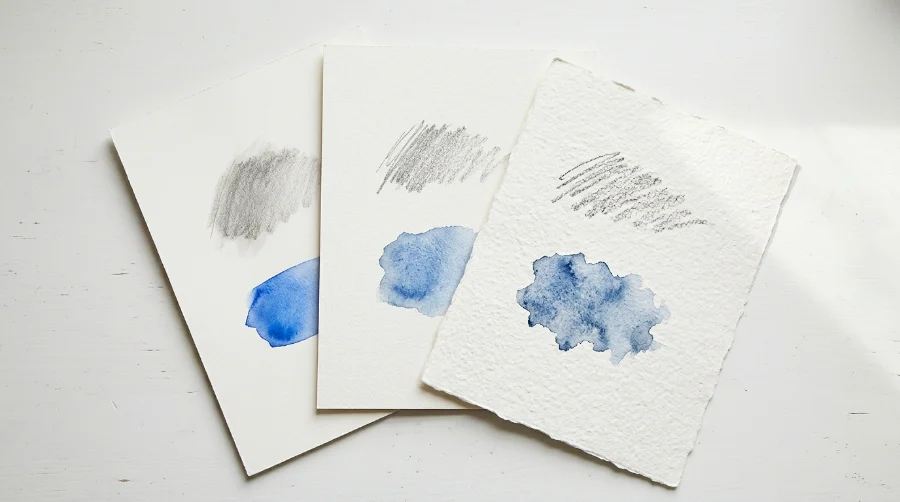
Smooth or hot press paper takes fine detail and shows every hairline. It gives a clean, precise result and it does not hold charcoal, pastel, or heavy graphite very well.
Medium or cold press texture is the most forgiving choice. It holds dry media, gives a slight tooth to pencil marks, and works with watercolor, ink, and charcoal.
Rough or rough texture gives dramatic broken marks and heavy tooth. It is a specialist choice and it eats pen nibs.
Newsprint is very cheap and takes pencil beautifully, but it yellows and it is not archival.
A textured paper is easier than it sounds because the texture becomes part of the mark. Beginners often prefer smooth paper because it feels more precise, and then wonder why their pencil looks flat.
Using the book well
A sketchbook is a record as much as a drawing surface, and a few habits make it far more useful.
Date every page. A date and a location turn a sketchbook into a document you can actually use later.
Fill the pages. A sketchbook with six finished drawings and forty blank pages reads as failure. Small drawings, fragments, and studies fill a page and keep the practice going.
Work across two pages for larger subjects when the binding allows it. Draw across the fold rather than avoiding it.
Keep the pages flat by pressing them under a heavy book, especially after charcoal or pastel.
Use the last pages for experiments with materials, since the first pages will get the most attention and you do not want to waste them on tests.
Carry a smaller book for the street and a larger one for the table. Trying to do both in one volume means you will do neither.
Paper that works badly
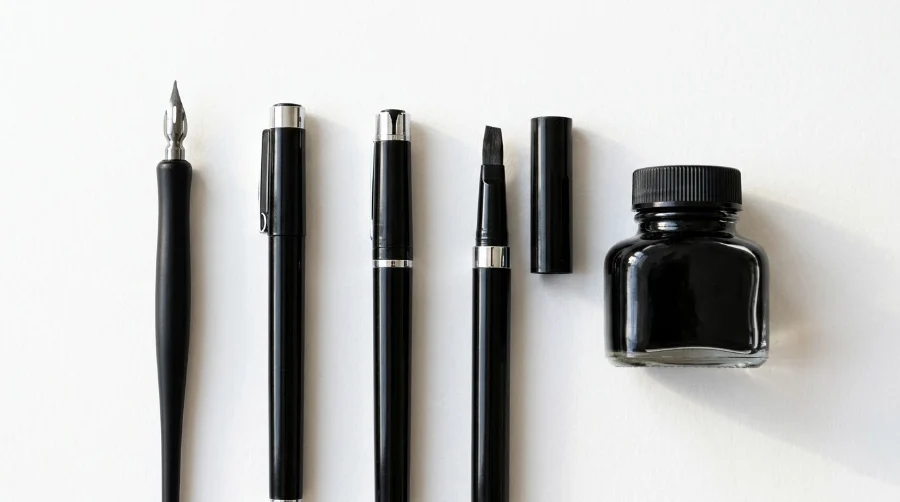
Very heavy coated paper for fountain pens and technical pens, which will skip and will not take ink properly.
Extremely absorbent paper with fountain pen ink, where the line will feather and the color will look pale.
Smooth paper for charcoal, pastel, or soft pencil, where the media will not grip and will be wiped off.
Thin paper for wet media, where the page will buckle and the paint will bleed through.
Any paper for brush pen work at full pressure, which can emboss or tear thin sheets.
How the format affects the drawing
A sketchbook imposes a small set of constraints, and once you stop fighting them they start helping.
The page size is a built in brief. A small page makes you decide what matters, because there is nowhere for the unnecessary detail to go.
The paper sits in a fixed position relative to your hand, so the angle of your wrist stays constant and the marks stay consistent across the page.
The bound edge limits your reach. Near the spine the page curves, which makes lines hard to control, so it is sensible to leave a margin and to avoid small detail right at the fold.
Pages facing each other protect each other. Once a page is finished, the next one keeps a sheet of paper between it and the drawing, which prevents smearing.
Sketchbooks also discourage the habit of treating each drawing as precious. Because the pages are cheap and numerous, you can experiment on them, which is where the improvement actually comes from.
Caring for a sketchbook
Store it flat and out of direct sunlight, especially if it contains charcoal or pastel.
Keep it away from damp, since paper cockles and then does not lie flat for the next drawing.
Photograph finished pages before the book is used further, because one damaged page can take the drawing with it.
Do not remove pages from a spiral bound book unless you intend to keep them, since the torn edge loses the drawing.
Exercises
Same subject, three papers. Draw a simple object on hot press, cold press, and rough paper and compare.
Fill one page. Make a page of thirty small sketches, each under two minutes.
Travel test. Carry a book for a week and record what you actually drew in it.
Pen test. Test your main pen on three papers before committing to a book.
The right sketchbook is the one whose paper suits your medium and whose size makes you want to carry it. Everything else is preference, and preference is worth more than any specification once the practical requirements are met.
S
SolvaHub Studio Editors
We teach drawing and painting from the ground up — line and shape, perspective and value, color and pigment, and the practice that turns all of it into skill. Every lesson is written around a real difficulty, tested on real materials, and edited for clarity before it goes live. If something here helps, the contact page is the fastest way to tell us.
Choosing a pen sounds trivial, since any of them will put a line on paper. It is not trivial, because the pen determines what kind of line you can make, how fast…
Almost every beginner owns a box of pencils and has no idea what the numbers on them mean. What they discover quickly is that the very soft pencils smudge, the very…
Paper is the one material in a drawing or painting that most people choose by accident. They use whatever is in the sketchbook they happen to own, or the cheapest…