Art Materials
Drawing With Ink and Pen Tools and Techniques
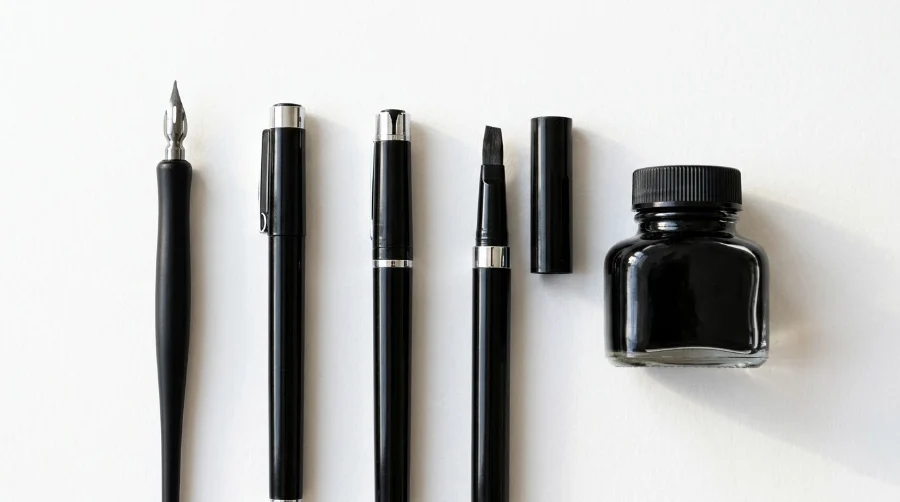
Choosing a pen sounds trivial, since any of them will put a line on paper. It is not trivial, because the pen determines what kind of line you can make, how fast…
A good brush is one you understand, not one that was expensive. The catalog description tells you the shape, the size, and the hair type, and once you know what…
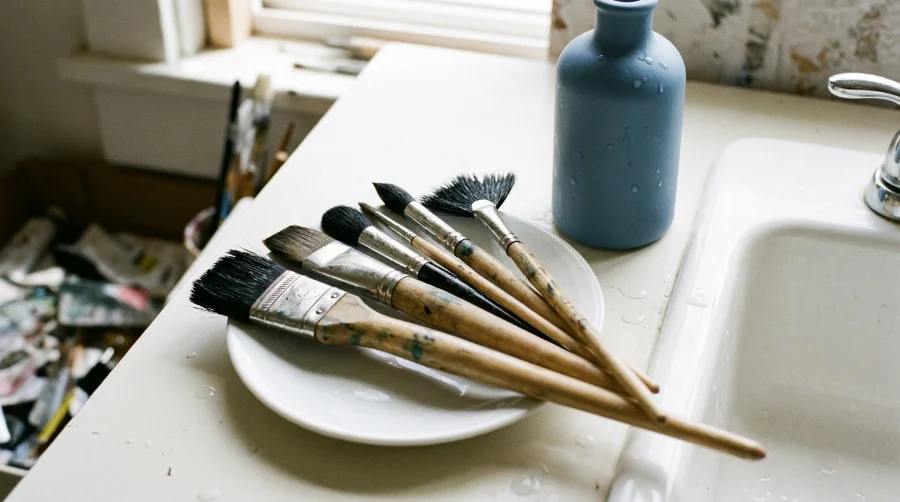
A good brush is one you understand, not one that was expensive. The catalog description tells you the shape, the size, and the hair type, and once you know what those three things do, you can pick a small set of brushes that between them make every mark you need. Most people end up with a drawer full of brushes they never use, and they use the ones they do not understand.
The second half of the topic matters more than people expect. Brushes do not die of use. They die of neglect, and a brush that is washed properly and dried properly lasts for years.
Brush shape determines the family of marks the brush makes.
Shape sets the family of marks. Size sets the range within the family. A large brush gives you big broad marks and cannot give you a fine one; a small brush gives you control and is miserable for covering a large area.
Natural hair holds pigment well, springs back to shape, and produces distinct edges. Sable and squirrel are the classic choices, and they hold the sharpest points, which makes them excellent for detail. Goat hair is stiffer and springier, good for texture.
Synthetic brushes are made from nylon or polyester. They are durable, inexpensive, and hold a point reasonably well, though a natural hair brush will usually hold a finer point longer. Modern synthetics are good enough for most work.
Blended brushes are a mix, combining a synthetic ferrule-friendly core with natural hair. These are the practical default for most painters.
Taklon is a synthetic fiber with a soft, tapered point similar to squirrel, and it is a good middle ground for detail work at a modest price.
The medium should drive the decision more than the picture does.
One important warning for acrylic and oil: do not use a good natural hair watercolor brush for heavy-bodied paint. The paint swells in the ferrule, splits the hairs, and ruins the point. Keep a separate set of cheaper brushes for paint that stiffens.
Most painters can do excellent work with five brushes.
Add a small hog bristle filbert or a fan brush later if you want texture. Resist buying a large set, because a small set you know thoroughly will produce better work than a large set you have to think about every time.
The rules are simple and the payoff is large.
For long breaks, wash and reshape every brush, then seal them in a plastic bag in the freezer or refrigerator. Frozen clean brushes come out in good condition, and it removes the temptation to leave them soaking in a jar for a month.
Do not throw a brush away just because the point has rounded. A rounded point is what a used brush looks like, and it can still make good soft strokes.
The real signs are:
A brush can often be revived. Wash it in warm soapy water, comb the bristles straight with your fingers, and roll it firmly between your palms to restore the shape. For oil brushes that have swollen in the ferrule, soaking them in hot water and then in a solvent-based cleaner can loosen the hardened paint.
For a portable kit, a canvas brush roll with individual slots is worth having, because brushes packed together rub against each other and wear the points. For travel, a rigid tube protects the tips better than anything else.
Keep brushes away from heat and out of direct sun, since both degrade the handles and weaken the glue holding the ferrule on. A drawer or a shelf out of the way of the window is ideal.
Brushes are the only tools in the studio that respond directly to how they are treated. Everything else mostly tolerates carelessness, and a brush that has been washed and dried properly will outlast several that were simply left standing in the sink.
Lessons that pair well with this one.
Choosing a pen sounds trivial, since any of them will put a line on paper. It is not trivial, because the pen determines what kind of line you can make, how fast…
Almost every beginner owns a box of pencils and has no idea what the numbers on them mean. What they discover quickly is that the very soft pencils smudge, the very…
Paper is the one material in a drawing or painting that most people choose by accident. They use whatever is in the sketchbook they happen to own, or the cheapest…